Skip to content
Monthly Archives: April 2018
Watch Fish Story (フィッシュストーリー), Right Now
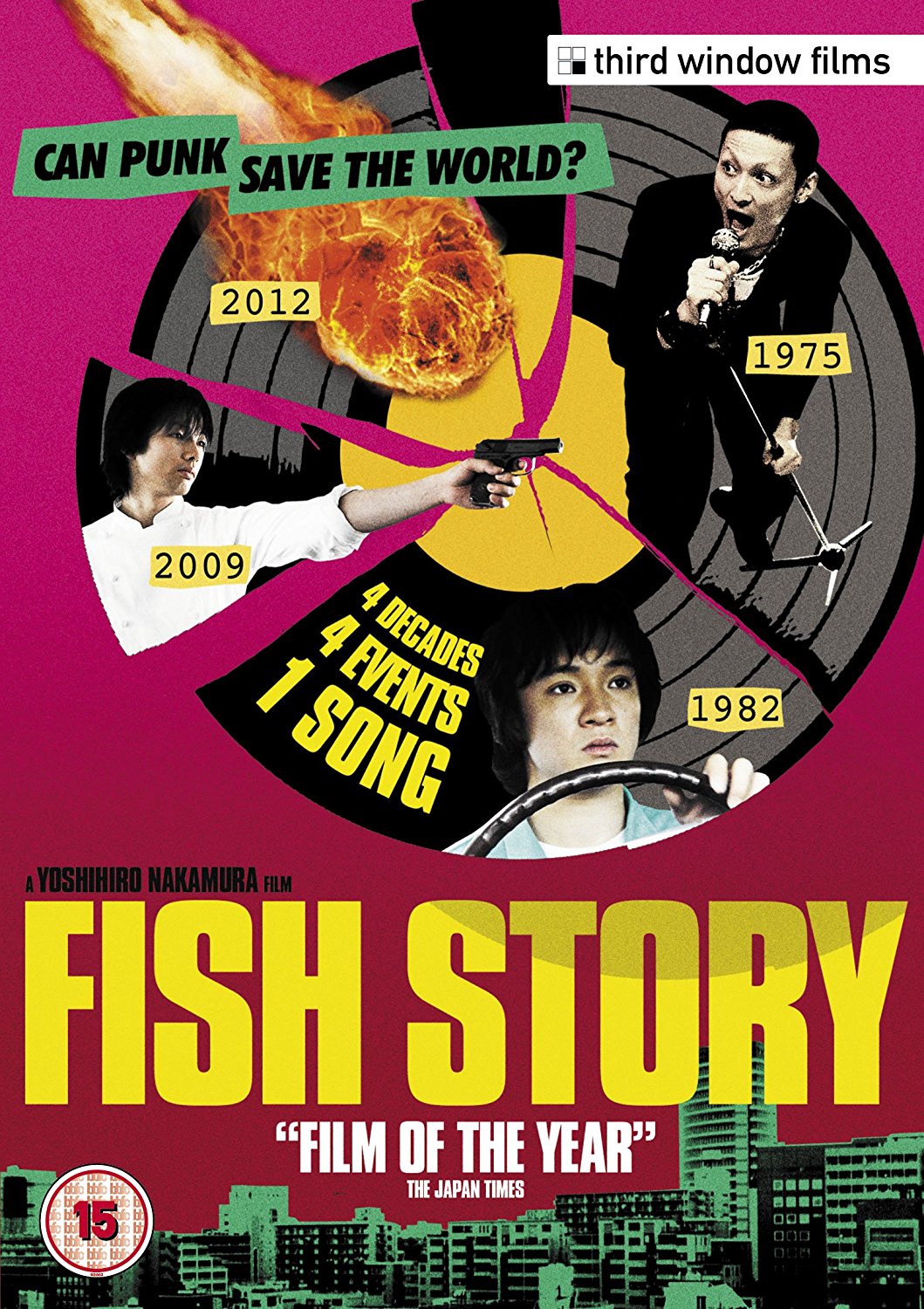
Fish Story movie poster
If you might like a movie that is equal parts…
- Memento: but instead of the story unfolding in reverse, it unfolds in a completely jumbled sequence, going from 2012, to 1982, to 2009, to 1975, and then back to 2012. If you enjoy a movie that calls for your active mental participation, and you appreciate the movie maker’s attention to detail in making all the seemingly disparate threads of a story mesh together, then Fish Story is for you.
- Anvil! The Story of Anvil: except instead of a story about a briefly famous band that falls into obscurity, the band in this story, Gekirin, goes from obscurity to oblivion. They write a punk song in 1975 that is ahead of its time, that almost no one appreciates, but ultimately is the key to saving the world (yes, punk rock can save the world, and fortunately, they actually wrote a great track for the movie).
- Armageddon: in 2012, the destruction of life on earth by asteroid is imminent. Last ditch attempts to save humanity, involving space ships and nuclear warheads, are involved. If you’re wondering what a forgotten punk rock song from the 70s has to do with saving the earth from an asteroid 37 years later, well you’ll just have to watch the movie!
- The Karate Kid and Power Rangers: a young man who isn’t sure why his father forced him to endlessly practice martial arts as a child finally finds his purpose.
- High Fidelity: the cool record store owner in this movie has the same encyclopedic knowledge of music as John Cusack’s character, but his sadness does not come from girl troubles.
- If You Give a Pig a Pancake (which is a children’s book, not a movie): after watching Fish Story, you might start thinking about causality, conditionality, and contingencies, but all I could think of was this book. Each step in the story makes sense by itself, but they all add up to a crazy spectrum of events.
…then you will enjoy Fish Story.