Posts in Category: Personal
WordCamp San Diego
-
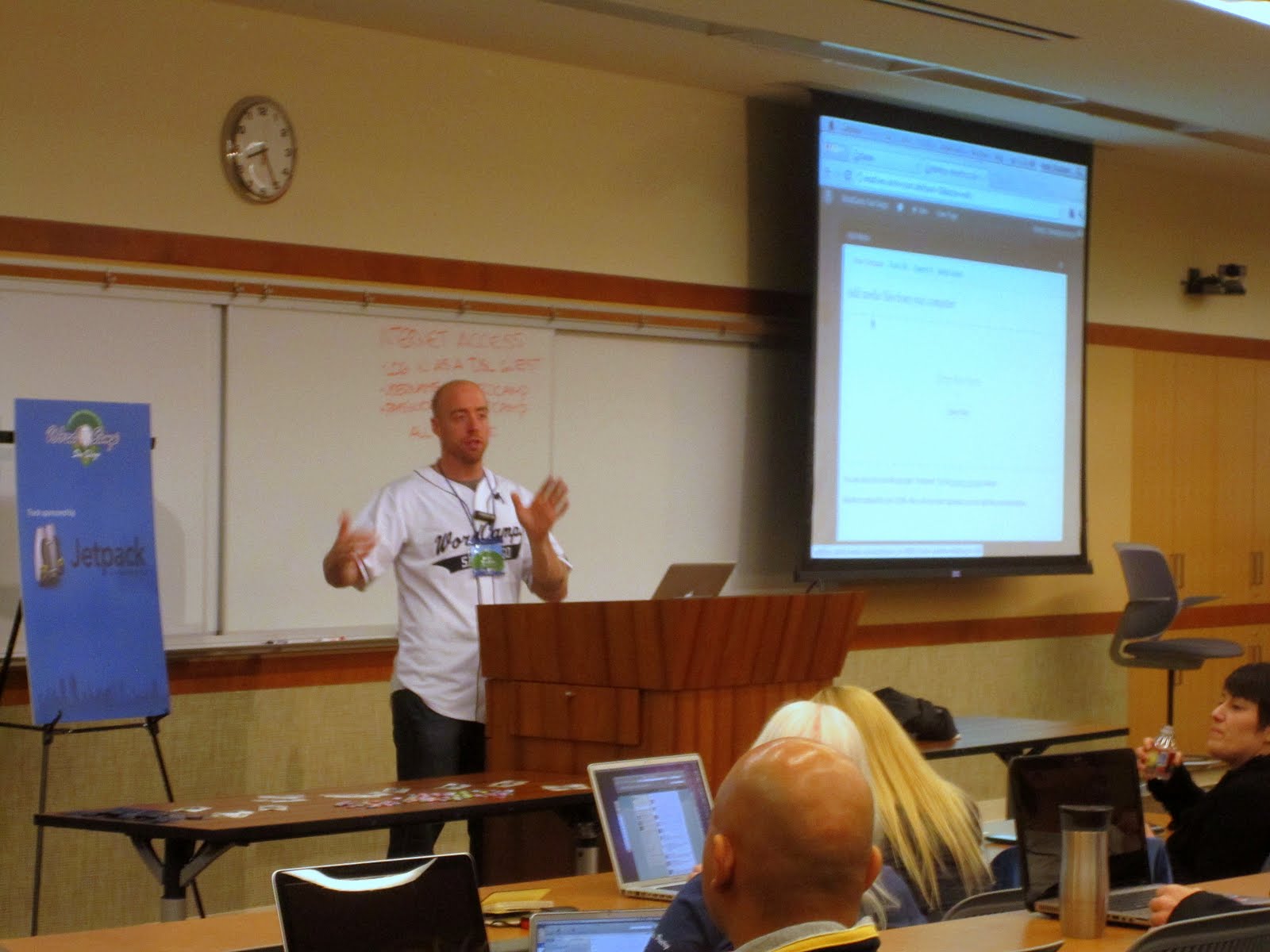
- @theandystratton presenting “Accomplish it with Core: Galleries, Sliders and More” at WordCamp San Diego
-
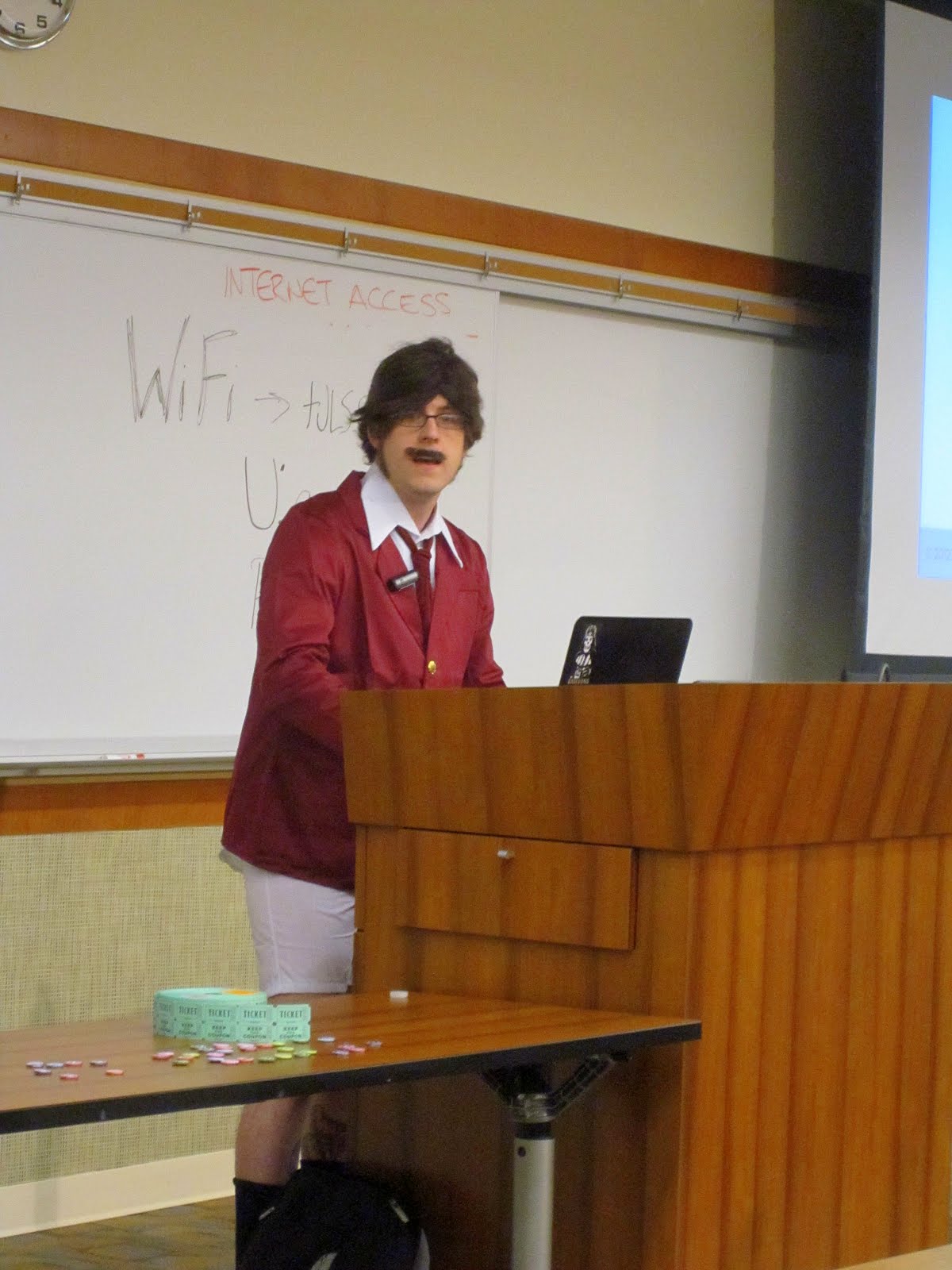
- @norcross is out of uniform for his presentation “Stay Classy, WordPress” at WordCamp San Diego
-
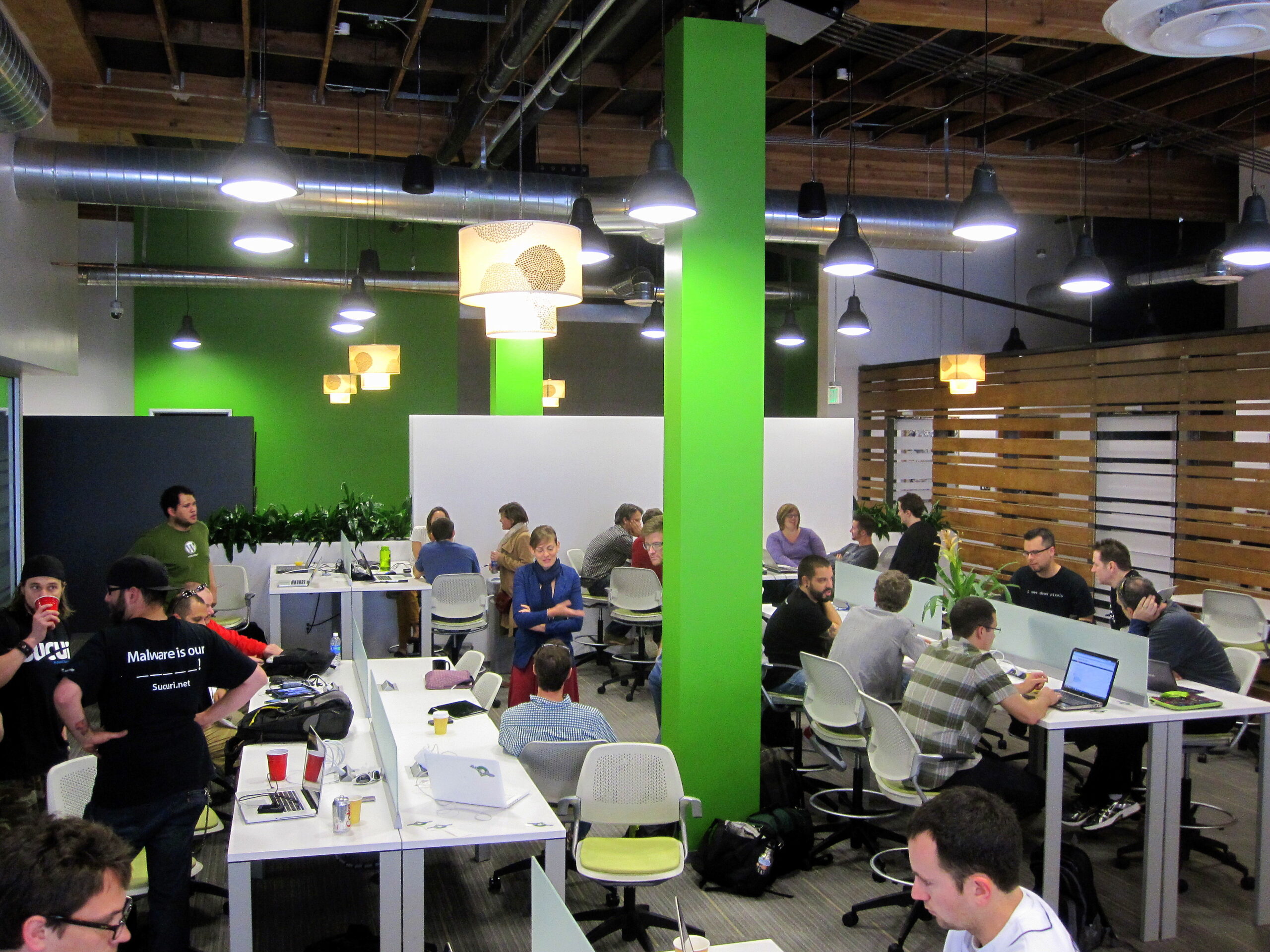
- WordCamp San Diego Developer Day, at CoMerge
-

- @tweetsfromchris takes on Nicky Rotten’s 2.5 lbs. burger challenge (with a gigantic side of fries)

This was my second WordCamp, and my first not as a speaker. When I presented at WordCamp Philly last Fall, I was blown away by the positive energy of everyone there (which is one of the things that led to my current position with WebDevStudios). WordCamp San Diego was just as much fun, and there was plenty to learn too. Coming from Philly means it’s a long way to go for a WordCamp, but WebDevStudios was a sponsor, so several of us from the company went. Since we are a virtual company, I also met a couple of my co-workers in person for the first time – @tweetsfromchris and @TobyBenjamin
WordCamps typically have 2 simultaneous tracks – one for developers and one for users. They also provide an opportunity for these two parts of the WordPress community to come together, so online businesses can find good developers, and for developers to find rewarding projects.
I stayed in the developer track for all but one presentation, and they were all excellent. WebDevStudio’s own @williamsba presented on how to configure and use WordPress multi-site. Even in the more introductory-level sessions, where I thought I’d already know everything, I actually learned a lot. The vibrancy of the WordPress community, and the dedication of the speakers, who appear without compensation, continues to impress me.
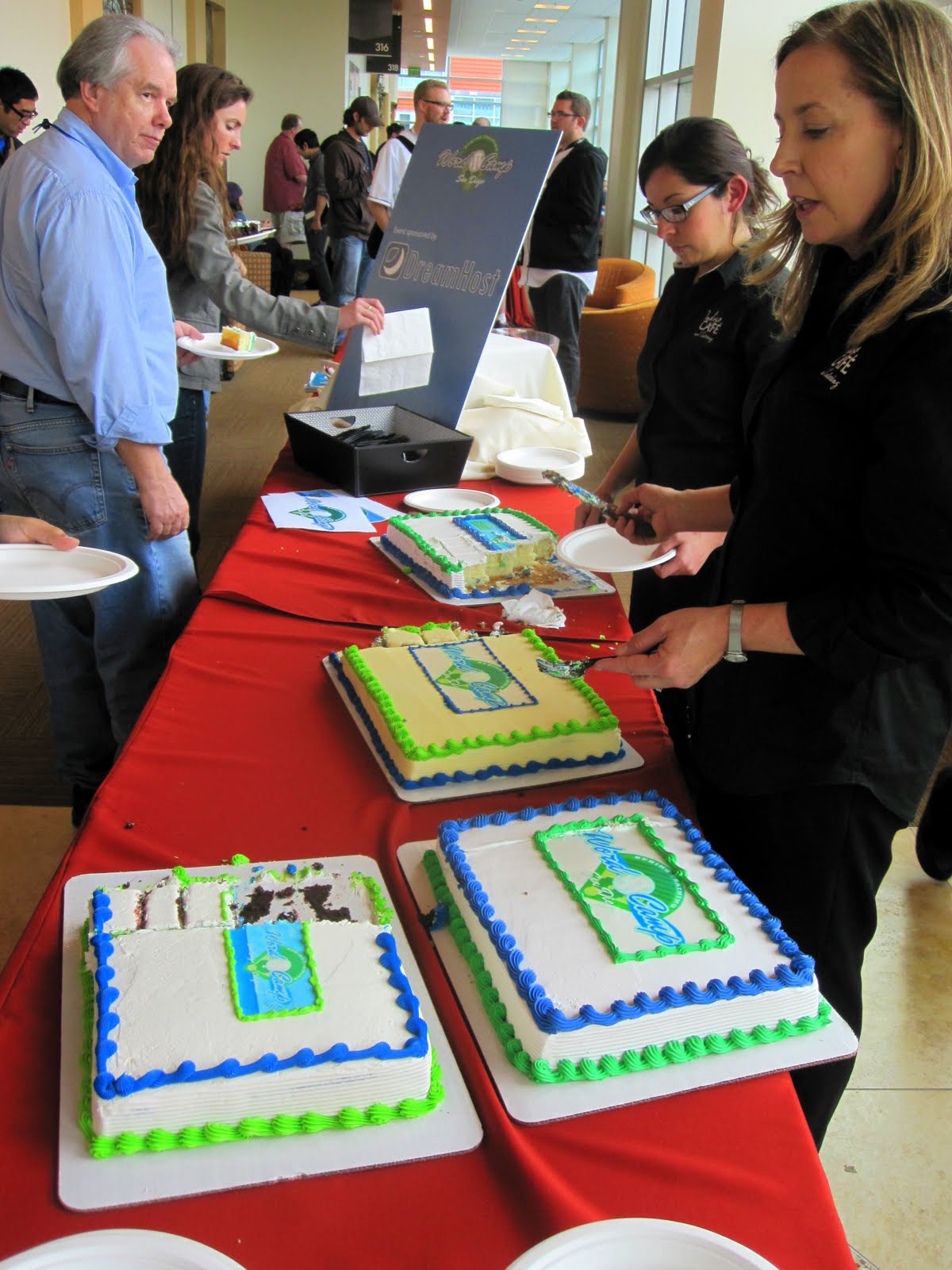
The “spring training” theme was really well done, from the matching baseball jerseys for the speakers, to the web site, stickers, and, of course, the cake. @norcross gave his whole talk as Ron Burgundy (yes, in his boxers), which was hilarous enough to justify him being the only speaker out of uniform.
The after party was a blast. It was my first experience where it was socially acceptable to both drink and have endless conversations about code and WordPress. I have found my people 🙂 and it was great to meet @housechick, @jaredatch, @matthewjcnpilon and @i3inary.
The 2nd day of the conference was a developers’ day, held at the very sleek Co-Merge workplace. This was similiar to the developers’ day at WordCamp Philly, with some short presentations, but the focus was more on people making connections and helping each other code.
The one challenge for me was sleep. WebDevStudios rented an apartment since several of us were there. The first night there was a party happening in an adjacent unit, and the thumping bass didn’t stop coming through the floor until about 3AM. The next night someone was shot and killed right outside our apartment, and the last night one of my co-workers had to get up and leave really early for his flight. But I’m not so old (yet) that I can’t handle it (actually, having kids has conditioned me to handle sleep deprivation better than I did years ago).
My next WordCamp is in just a few weeks. I’ll be speaking at WordCamp Nashville, on how to apply dependency injection techniques to WordPress plugin development.
I took pictures throughout the day – here’s the complete album:
-
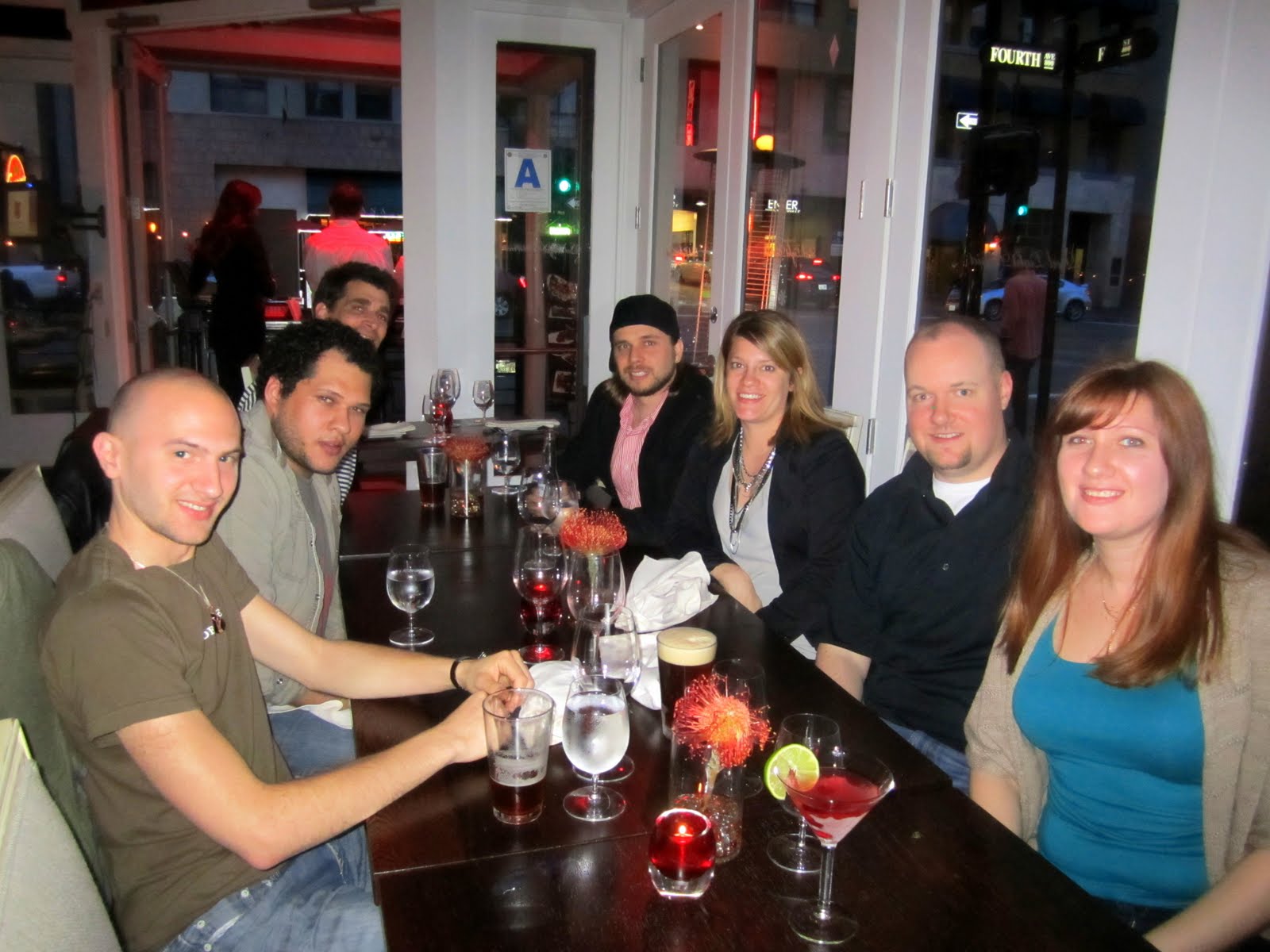
- The WebDevStudios San Diego dinner
-
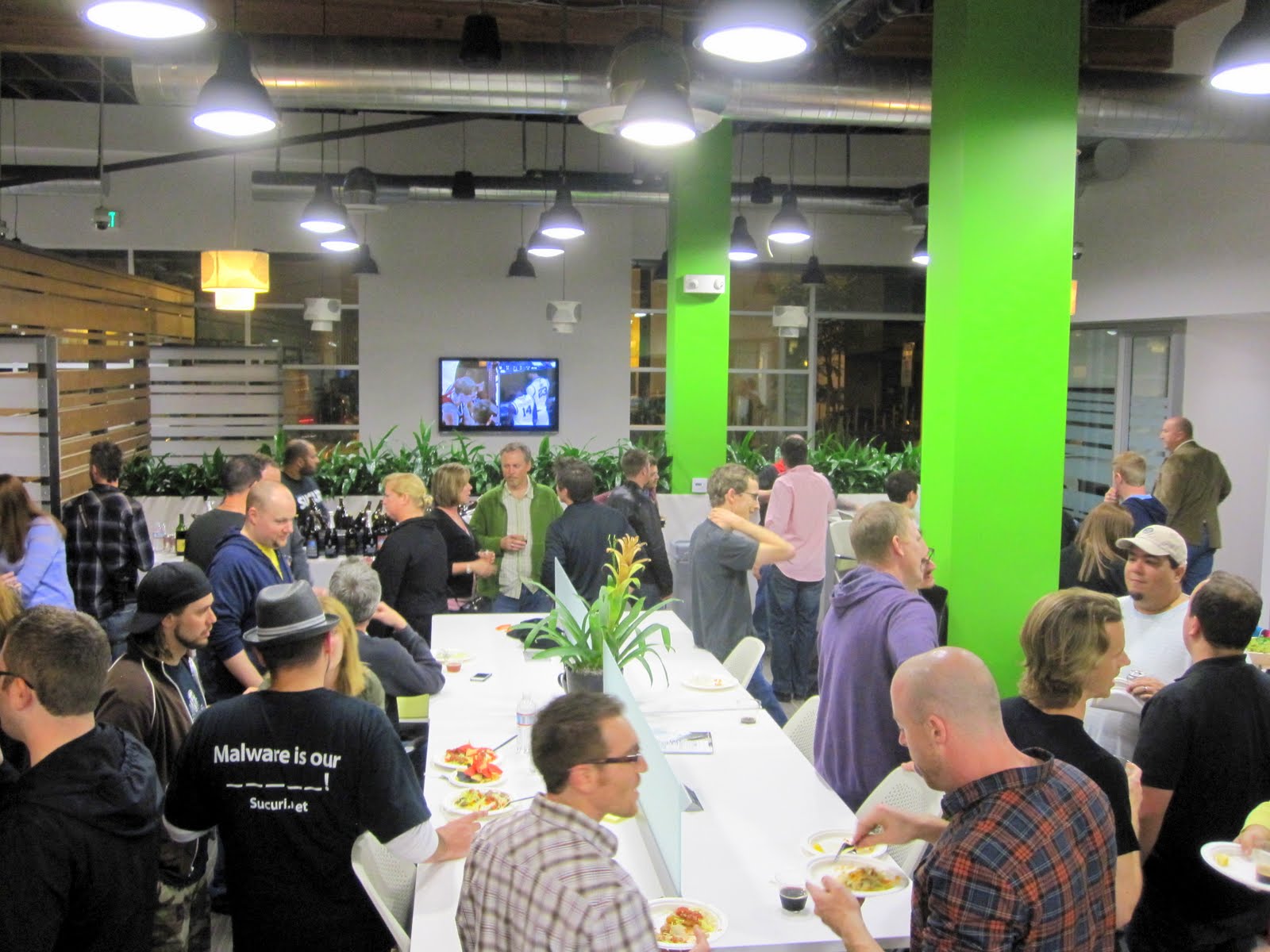
- The WordCamp San Diego speakers and sponsors dinner at Comerge
-
- @theandystratton presenting “Accomplish it with Core: Galleries, Sliders and More” at WordCamp San Diego
-
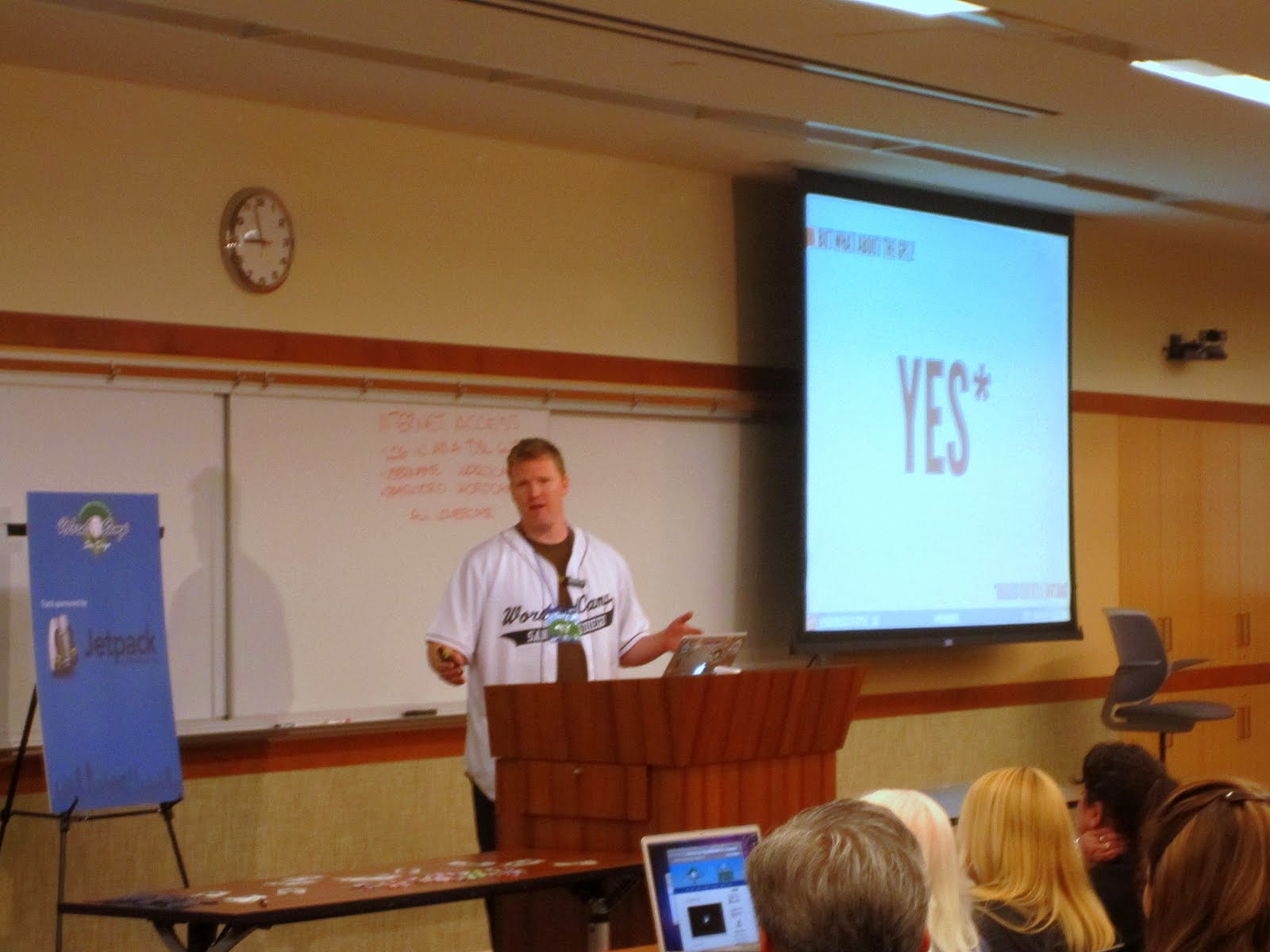
- Pic of @brandondove presenting “Premium Plugins & Adhering to the GPL” at WordCamp San Diego
-
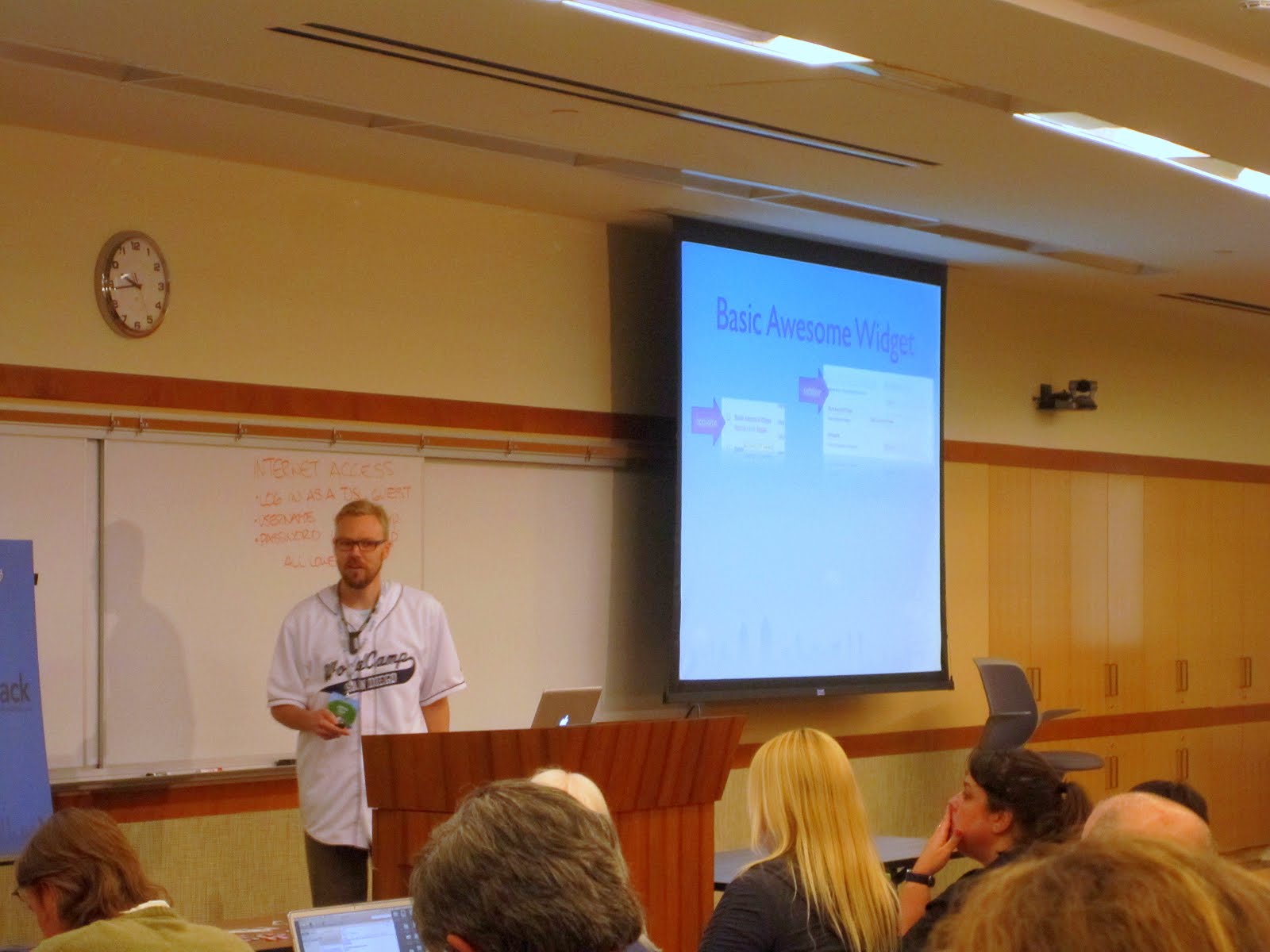
- @jeffreyzinn presenting “Playing Hooky with Actions & Filters” at WordCamp San Diego
-
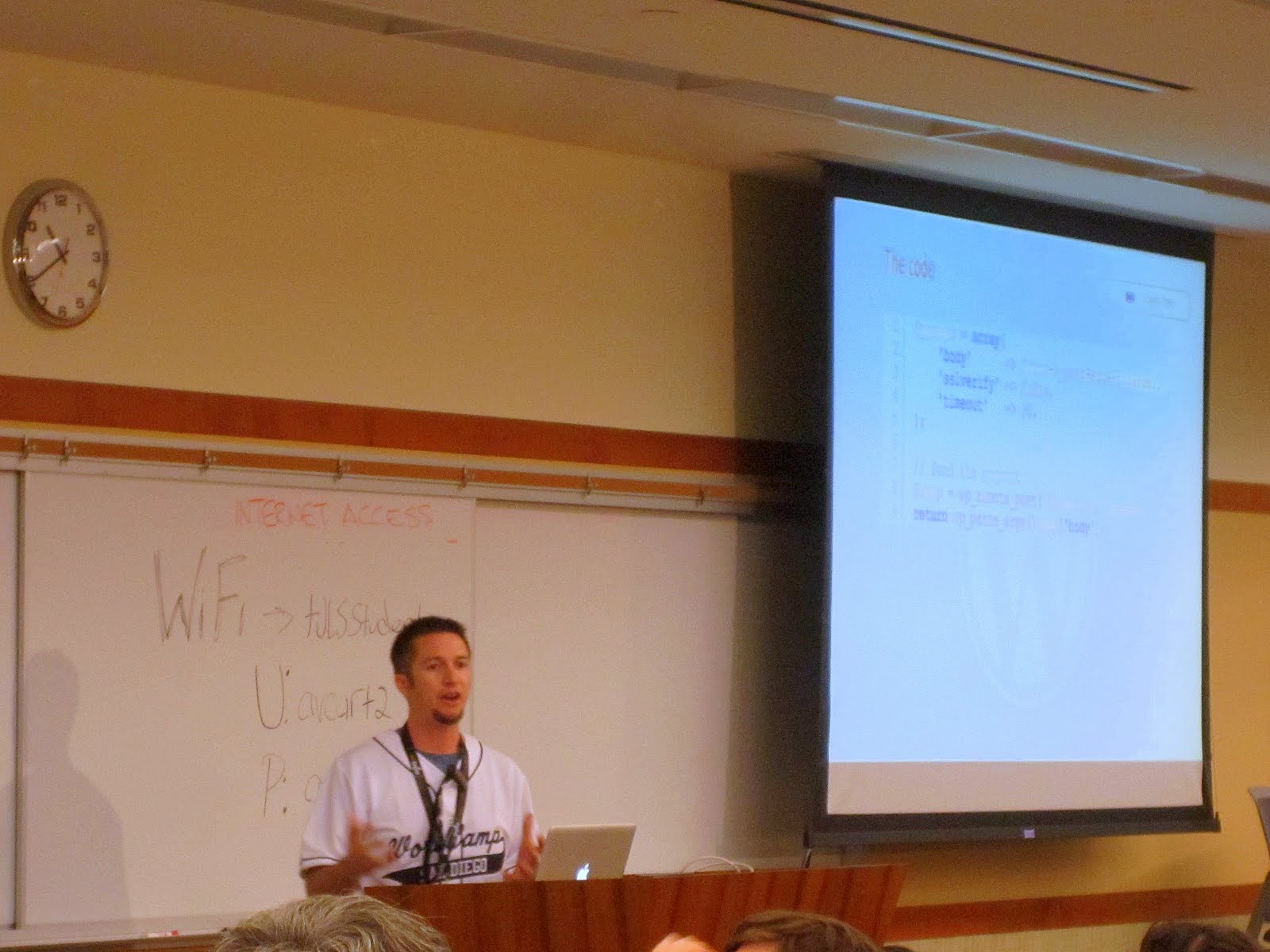
- @BlueDogWeb presenting “Integration of WordPress with External APIs” at WordCamp San Diego
-
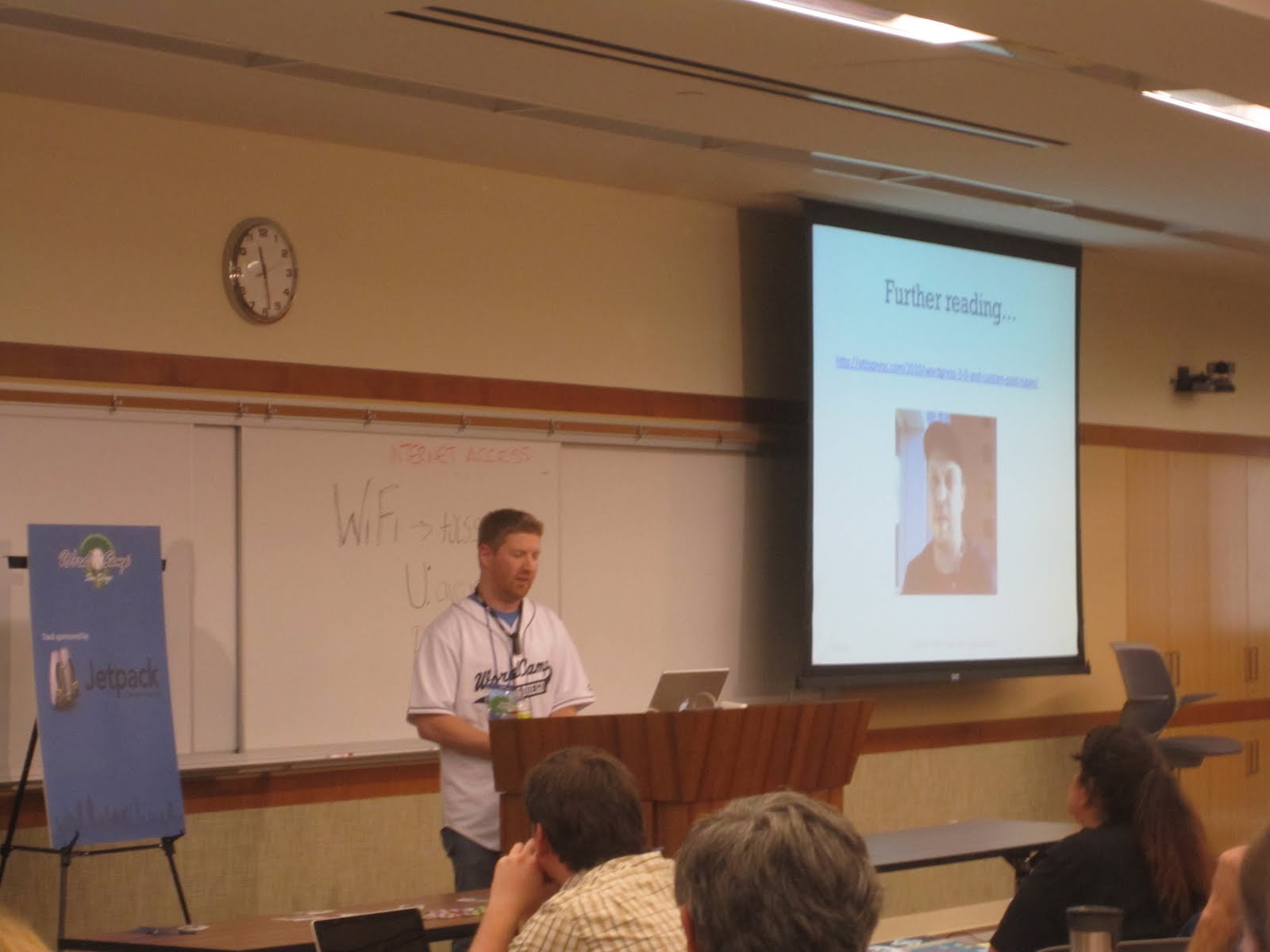
- @jaredatch presenting “Custom Post Types & Taxonomies” at WordCamp San Diego
-
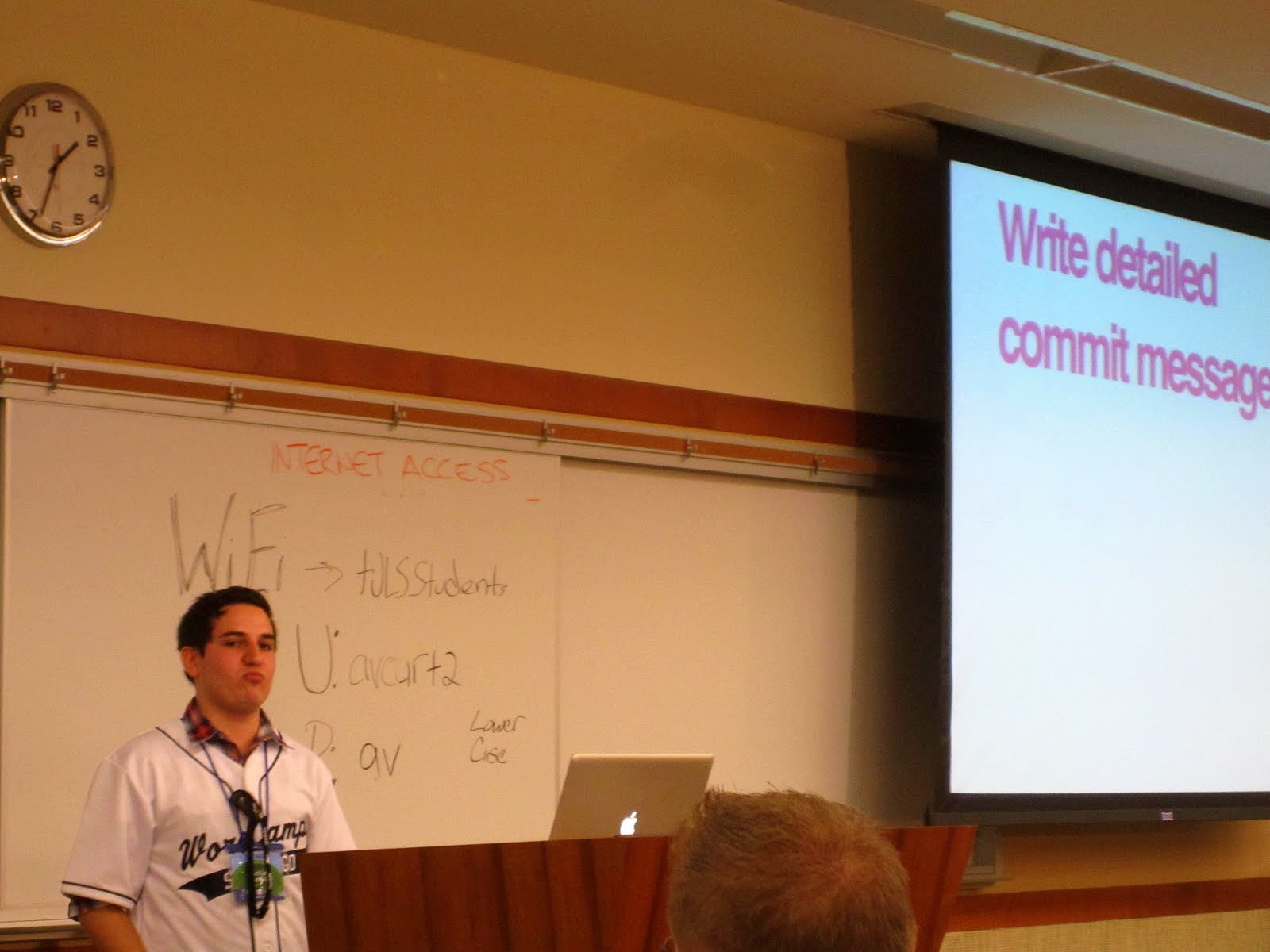
- @jkudish is serious about you writing detailed commit messages in git, in his “Using Git” presentation at WordCamp San Diego
-
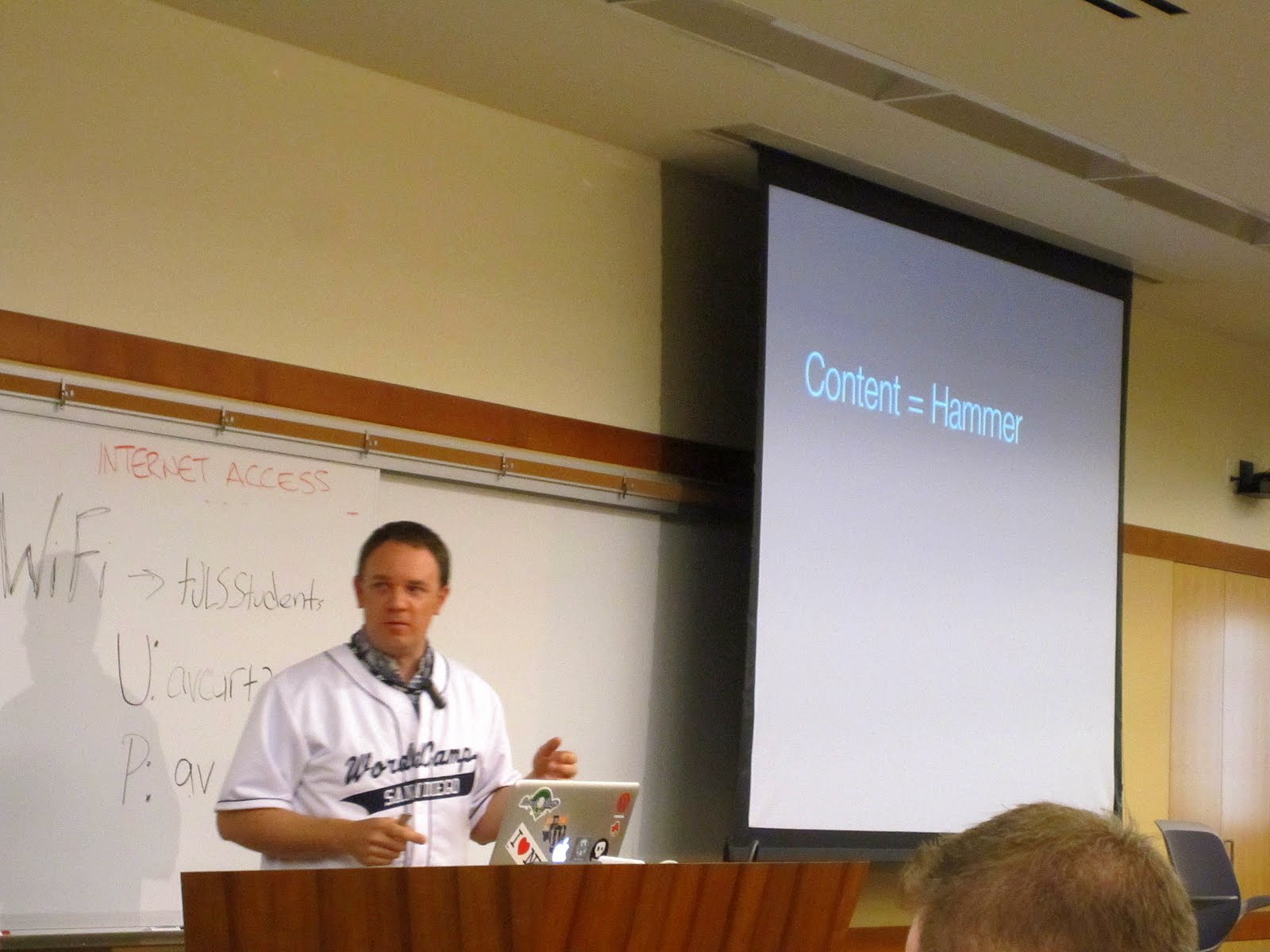
- @simpledream presenting on how to test (and break!) WordPress themes at WordCamp San Diego
-
- Cake! WordCamp San Diego
-
- @norcross is out of uniform for his presentation “Stay Classy, WordPress” at WordCamp San Diego
-
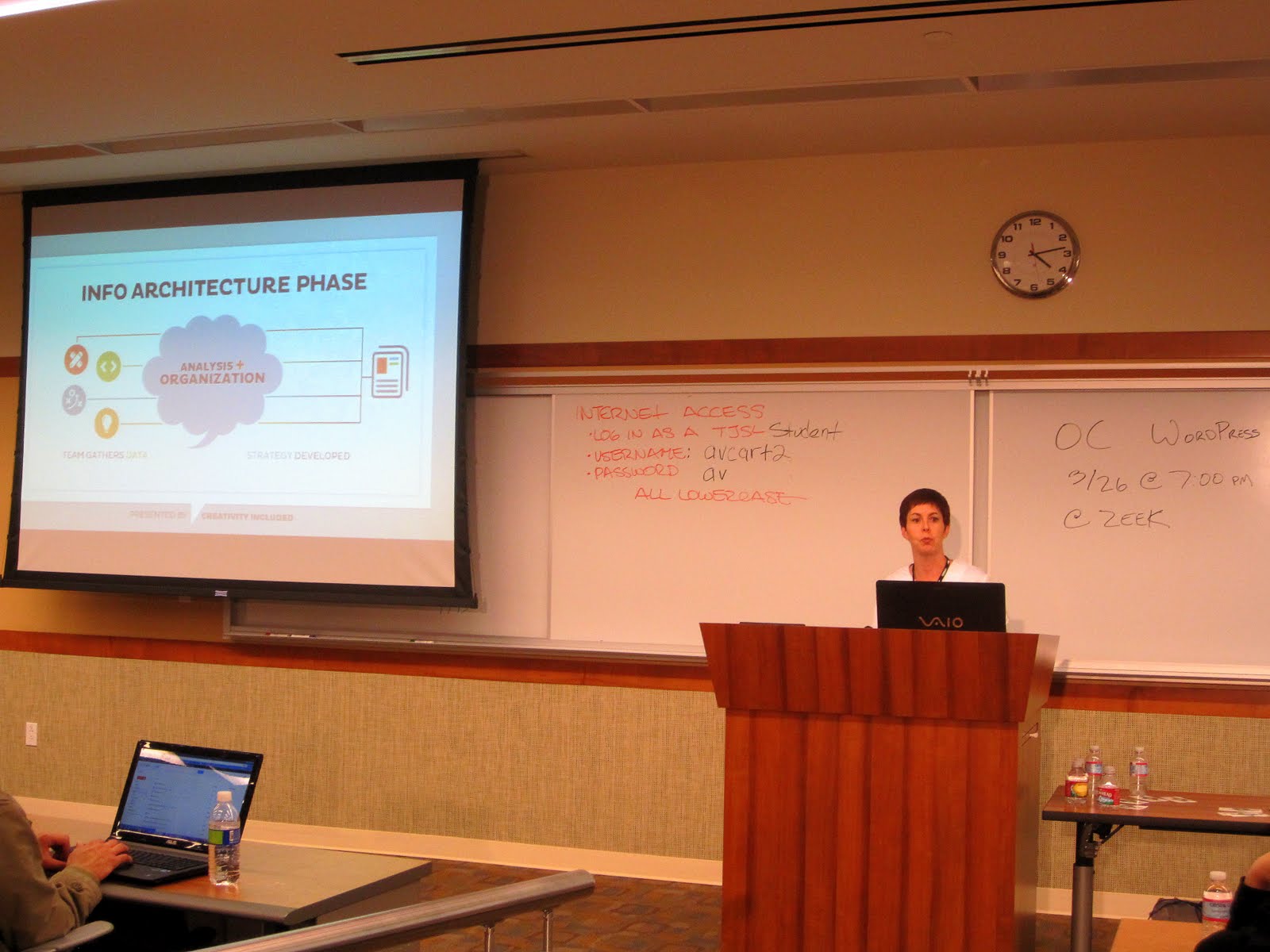
- @cfordrun presenting “Information Architecture for WordPress” at WordCamp San Diego
-
- WordCamp San Diego Developer Day, at CoMerge
-
- @tweetsfromchris takes on Nicky Rotten’s 2.5 lbs. burger challenge (with a gigantic side of fries)
My last day at Penn, my first day at WebdevStudios
This past summer I started attending the Philly WordPress meetups, which led to an opportunity for me to speak at Philly WordCamp, which led to an amazing opportunity to work at WebDevStudios, with an amazing team. Today – Monday – was my first day on the job. I’m doing custom development work and soon I’ll get involved with project management. I’m starting with some enhancements to Baja.com. Friday was my last day at Penn, so my head is spinning a bit from the transition.
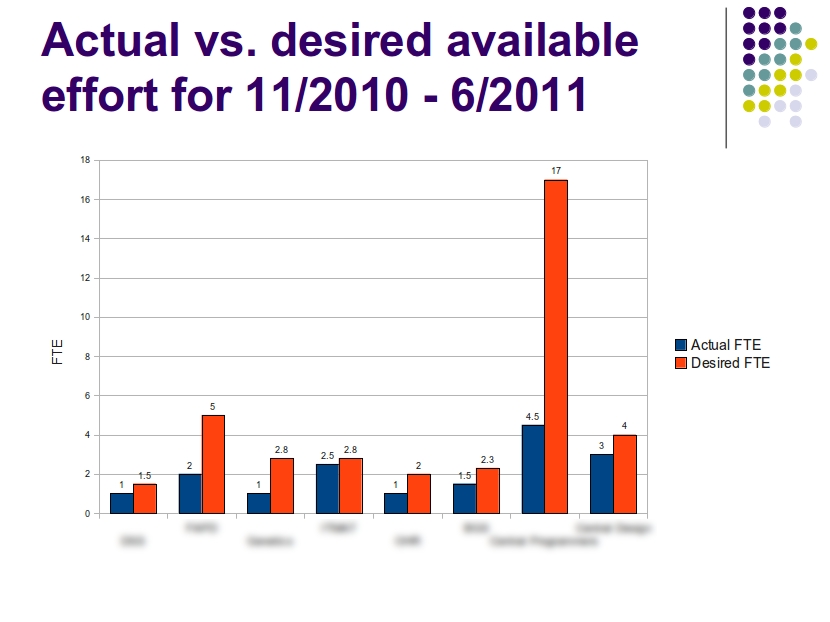
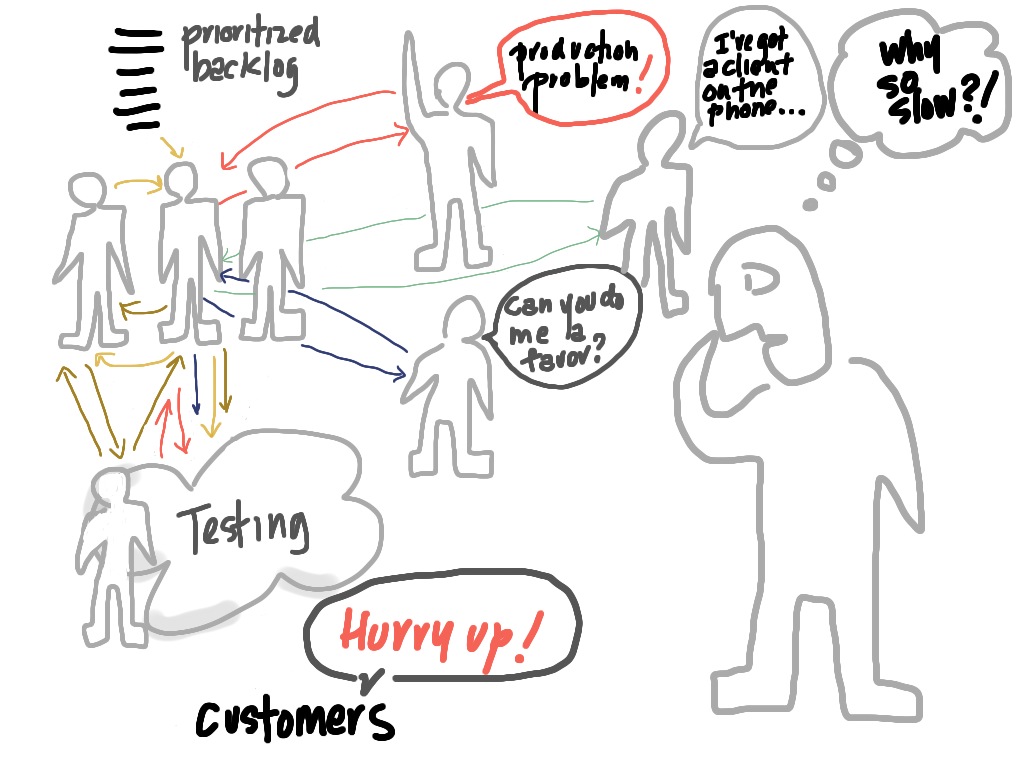
I’ve been part of the web team in Penn’s School of Medicine since 2004, and I’ve been Director for the past 2 years. My team had a lot of demands placed on them, with the need for projects outpacing what we could provide. One of the first things I did as Director was learn Agile practices so I could teach them to my team (and I brought in a scrum coach to help). These two graphics illustrate the two primary challenges we faced – not enough staff, and too much chaos:
-
- Blue represents available SOMIS staff, red indicates how many people would be needed to complete the desired work
-
- Illustration by Esther Derby showing a not very well functioning development process
For many months my work spilled over into nights and weekends as I tried to move things forward. I can’t say we entirely solved these problems, but we made a lot of progress, and got the wheels turning in higher levels of administration to address the situation (“turning the aircraft carrier,” as one of our project managers put it – change is not easy to implement in a huge institution). Deciding to leave was hard, but an opportunity to turn my WordPress plugin development hobby into a job, to work with Brad (@williamsba) and the WebDevStudios team, and having the flexibility of working at home… it was too good to pass up. I’m especially looking forward to having more time to code again. If the past 2 years have taught me anything, it’s that I have a passion for software development, and always striving to do it better.
Clean code for WordPress at WordCamp Philly
Update 11/21: Video of my presentation is now available at wordpress.tv, and I put up a post yesterday with more pictures.
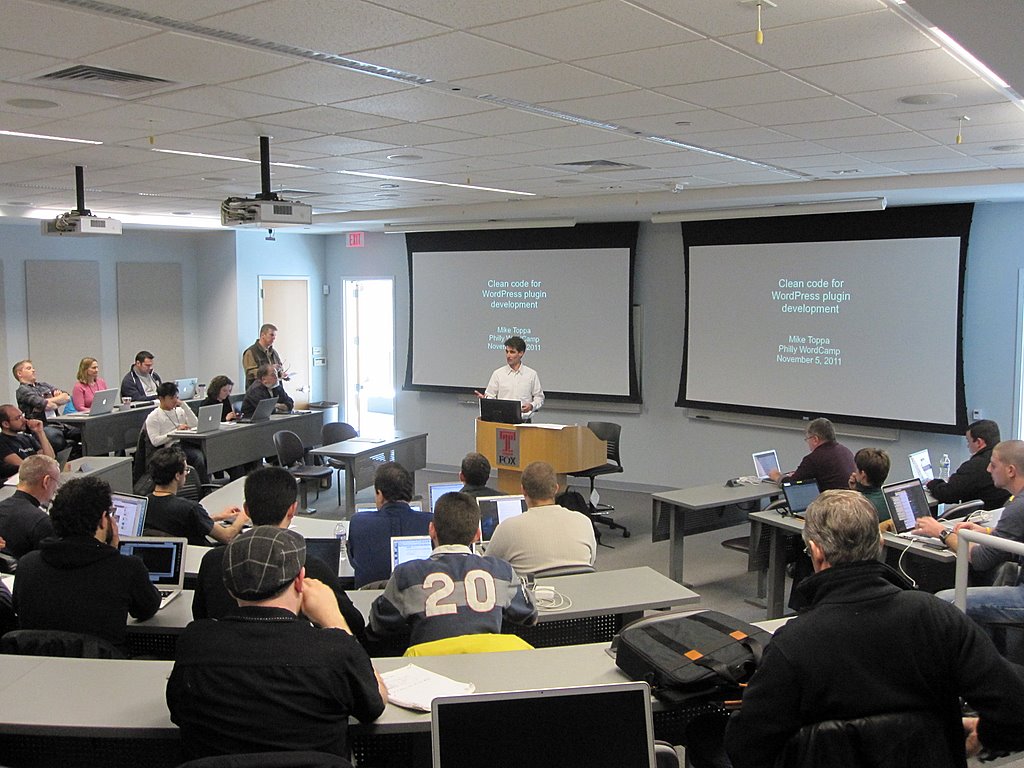
My Clean Code for WordPress presentation at Philly WordCamp
WordCamp Philly this past weekend was a blast, and I met a lot of great people. The vibrancy of the WordPress community here in Philly is impressive. Giving my Clean code for WordPress presentation was also a lot of fun. I got vigorous agreement from the audience that more evangelism for clean code in WordPress plugins is definitely needed. Video of my presentation will be online at wordpress.tv in a few weeks.
The youngest attendee was 10 years old. He came to the developers’ day on Sunday too. The organizers were planning to guide him through fixing a bug in WordPress core, so he could be the youngest contributor to WordPress and get his name on the official credits. I spent the developers’ day getting started on adding Flickr support to Shashin. I’m not a Flickr user, but I was sitting next to Captin Shmit, who is, and he had a lot of useful suggestions. Thanks Captin! (yes that’s how he spells it).
Below are the slides from my presentation (if you click the link, it will take you to slideshare.net, where you can also see my notes for the slides).
Welcome Back, Toppa (Again), and Resuming Plugin Support
UPDATE 3/13: Shashin is not working properly with private albums, since Picasa introduced https support. Also, for public albums, enter their urls with “http” for now (not “https”). I have a major rewrite of Shashin underway, so I will address these problems in the upcoming version. I’m still putting in overtime at my job, so a new version is likely at least one month away. Thanks for your patience.
2010 was the year I worked too much. I have one job, but I was doing the work of two. That’s why my blog was mostly quiet last year, and I didn’t have time to update my WordPress plugins. But I remind myself this is a “nice to have” problem, as there are many people in need of any job these days. I’m happy to report that we are hiring for a new position, which means I can go back to doing one job in a few months (if you’re interested in being an Agile Product Owner for the U Penn SOMIS Web Team, you can apply here – look for reference number 110129833).
I still have too much to do for the next few months, but I’m freed up enough at this point that I can start responding to support questions again for my plugins. I’ve started work on a rewrite of Shashin, but at this point I can’t say when it’ll be done. Please use the comments section of this post for questions (I’ve closed comments on the previous support post).
I’ve added threaded comments to my site’s theme (keep an eye out for the “reply” links under each comment). This will help make different support discussions easier to follow.
Silent Running
It’s been over a month since I blogged or tweeted. Aside from this post, it’ll be probably another month before I do so again. I’d especially like to apologize to the people looking for help with Shashin and my other plugins, as I have not been responding to support requests (for my plugin users, please see this post).
As I mentioned back in the Spring, I’ve been leading our web team’s transition to scrum. Since then we’ve been working with Agile/scrum training coaches Bob Hartman and Darian Rashid, and they’ve done an amazing job helping us make the transition a successful one.
Before starting with scrum we had poor visibility into our future work – planning was extremely difficult. Now we’re getting better visibility, and it’s something of a “be careful what you wish for” situation. I’ve been working nights and weekends for the past month, getting a handle on all our projects and our schedule, so I can manage expectations for both my team and for our stakeholders. Work is the first thing I think about when I wake up, and the last think I think about before I go to sleep at night. It’s going to stay that way for at least a few more weeks (possibly months), as we get through this transition.
We have several goals: improving quality, teamwork, etc. But our first is to improve our planning: to align our workload with our actual capacity, establish a sustainable pace, and create reliable expectations for our stakeholders. With scrum’s velocity measures and other metrics, my ultimate goal is to clearly demonstrate to our stakeholders what our team already knows: that we do an incredible amount of quality work with a very small staff, and that if we’re expected to do even more, we need more people.
Introducing Kai’s Candy Company
[simage=506,512,y,none,both]
My blog has been quiet recently, as I’ve been focused on creating and launching the site for my new business, Kai’s Candy Company. Our goal with the company is to seek out the most unusual, fun, and tasty candies from around the world, and sell them! We’re starting with Obama and McCain candies that we’ve made especially for the 2008 Presidential campaign. The candies are hand made by artisans in Japan, using traditional kumi ame (rolled candy) techniques.
We also have a Halloween candy poll that’s waiting for your vote! Your votes will help us decide which candy designs to pick for our Halloween candies.
The Job
It’s dawned on me that I haven’t said much about my new job yet. One of the major downsides to leaving California was giving up my job at HighWire, but I’m happy to report that I like my new job at U Penn’s School of Medicine even better. I’m in the Information Services group. I don’t have as much customer contact as I did at HighWire (which I miss), but on the technical side, there is a much greater breadth to the work. Instead of having a primary focus on just scripting, I’m doing a lot of application design and database development. My current projects are a web-based email account application system, and revamping the Med student online application process. All the tools used here are new to me – PHP, Oracle, Smarty, and some home-grown tools – so that also helps keep things fresh. I’m working in a small group of about a dozen very likeable people, so I’m making new friends too. Unfortunately, my position is funded for only one year. It looks like there’s a good chance it’ll be extended for a second year, or made permanent, so I’m crossing my fingers. I’ll find out when the budget is finalized for the next fiscal year, which will happen around the end of the summer.
The application architecture that’s been deployed here is the best I’ve seen. A typical architecture for web applications consists of a database backend, Java or CGI scripts as a middle “application” layer, a templating system for the front end, and maybe a security layer (typically handled through the web server or the application layer). The architecture here has 4 layers: 1. the database (Oracle) back-end; 2. the LDL (Logical Data Layer), which provides role-based access to the database (you define your queries in XML, along with column and row based access rules, and it’s then compiled for better performance); 3. the “WI-Engine” which serves as the application layer, written in PHP (it allows you to design your pages in an object-oriented fashion – using “panels,” “subpanels,” and “dialogs” which can communicate with each other); 4. a template layer, using Smarty.
The WI-Engine took the most getting used to, as I had to orient myself to thinking of all the page components as objects. Once you get going with it though, it’s very efficient. The LDL is cleverly constructed. Since the applications we design are for use within the School, you always run into issues such as what a student can do with an application vs. what an administrator can do with it. All those access rules are clearly defined in one place, and it’s sitting just above the database itself, so it’s quite unlikely that someone could hack through any loopholes in the application layer.
The Mike Toppa Archiving Project
I’ve begun work on a daunting task: the Mike Toppa Archiving Project. I have many shoeboxes full of floppy disks: Commodore 64 5 1/4″ disks, old PC 3 1/2″ disks, Zip disks, and a few Mac disks. These contain research papers, correspondence, software (including programs I’ve written), games, and lots of data. With my current PC, I obviously can’t access the C64 disks, and I can’t read about half the data on my old PC and Mac disks due to file format incompatibilities. For current versions of MS Office, Microsoft no longer provides filters for my old Ami Pro (word processor) and Quattro Pro (spreadsheet) files.
Aging computer files are actually a very serious, worldwide problem, as described in this excellent Technology Review article: Data Extinction. “The layman’s view is that digital information is more secure, when in fact it’s far more ephemeral…We know how to keep paper intact for hundreds of years. But digital information is all in code. Without access to that code, it’s lost…more and more of what matters to us is digitally produced, and we can’t guarantee that any of it will be usable 100, or 10, or even five years from now.” The article describes four possible solutions (see the table at the bottom of the article) but the only one that’s practical for your average person is “migration,” so that’s what I’m doing.
I mentioned in an earlier post that I got may hands on a newly developed network card and a web server for my C64. I spent some time this weekend trying to get it talking to my home network, but haven’t succeeded yet. Once I do, I can transfer C64 disk images through its web server, onto my PC. At that point, there’s a PC program I can use that will extract files from the disk images. My primary goal is to get at text I’ve written (mainly letters and research papers – I used my C64 all the way through 1992). The C64 used a variation of ASCII, so I should be able to extract the majority of the text. It would take forever to migrate the hundreds of games that I have, and others have already migrated most of the old games anyway, so I don’t think I’ll bother (you can download C64 games to your PC from various sites and then run them with C64 emulator software).
For my old PC files, I still have the install disks for the old software that can read them. But I don’t want to pollute my PC with those programs (since they’re Windows 3.1 programs, I doubt they’d uninstall properly). Maria’s old laptop is overdue for a full re-install of the OS, so before doing that, I’ve installed my old versions of Ami Pro and Quattro Pro there. I’m converting everything to rtf and csv format, which I’m hoping are generic enough to keep them compatible with whatever kind of software we’re all using 10 years from now.
The last step is to put everything on CD-Rs. I’ll go from 5 shoeboxes of floppy disks to probably less than a dozen CDs. Of course the problem there is – despite claims that they’ll last 100 years – you can actually end up with unreadable disks in as little as two years. See The Myth Of The 100-Year CD-Rom. So I guess I’ll just have to regularly make copies of them until something more durable comes along.
Wish me luck!
United Airlines Helps Your Toddler with Erectile Dysfunction
How’s that for a headline? I’m shutting down Kai’s email account for a while. I made the mistake of providing it to United for his frequent flyer program membership, and I overlooked the pre-checked checkbox about receiving offers from “carefully screened 3rd parties.” Those 3rd parties are now sending him numerous messages every day for Viagra knock-offs, blind-date services, home refinancing offers, etc. I know United’s the culprit because:
- before I signed him up, he got absolutely no spam
- the spam started coming right after I signed him up
- I haven’t given his email address to any other organizations
- I signed myself up at the same time and started getting the same messages in my account.
It’s really quite despicable.
Hopefully if the spam bounces from his account for the next year or so, his name will come off the spam lists. He doesn’t really need an email account just yet anyway.