My father passed away on May 10 last year, after a short and unexpected battle with cancer (aside from some back pain, he was doing fine just a few weeks earlier). I wrote his obituary the next day. There was a short graveside committal service, where I also had the opportunity to say a few words about him. I want to share those words here, and his obituary. Two days ago, March 10, he would have been 83.
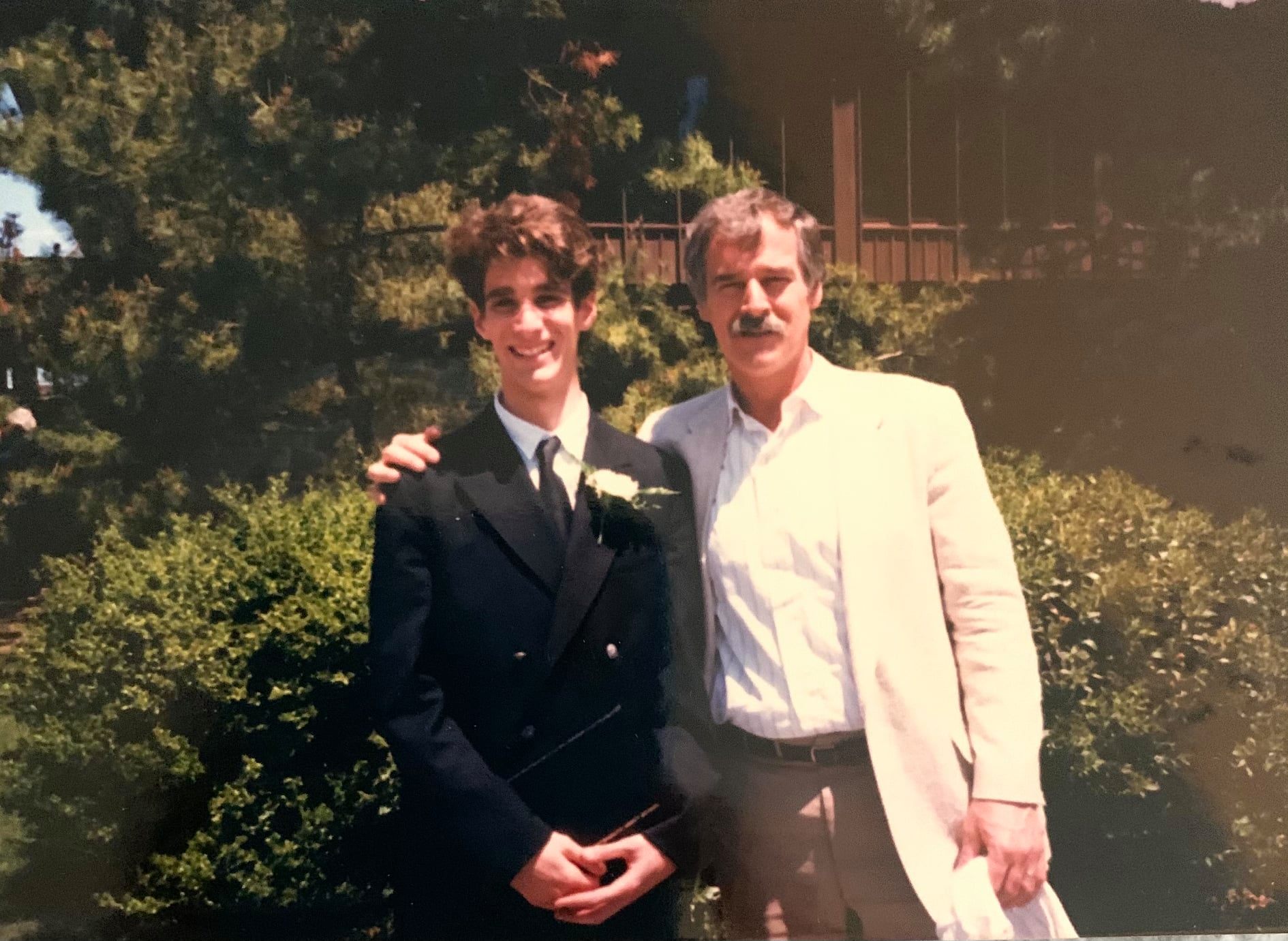
I want to thank all of you for coming today. It’s a testament to who my father was, and his place in our community, to see so many of you here today. A few days ago, the Newport Daily News columnist Jim Gillis offered a remembrance of my father. He wrote that whenever he saw Terry Toppa, they discussed two topics. One was small businesses in Newport, and the other was the Red Sox. At home I have a collection of about two dozen ticket stubs from all the Red Sox games I went to with my Dad in the late 70s and early 80s. I’ve kept them all these years because they represent some of the happy childhood memories he gave me, and the bond we shared. My father loved all his children and grandchildren, and found a way to share a bond with each of us.
Terry was also an accomplished athlete, and many of you here today know him from the tennis courts, or in earlier years, the basketball courts. As I grew up, my interests took me away from sports, and it was only when I was older that I realized he had never expressed even the slightest hint of disappointment, even though I’m sure he would have loved for me to follow in his footsteps. He loved me for who I am, just as he loved each of his children and step-children for who we are.
In many ways my father was my role model, and I like to think that many of my best qualities as a man and as a father I learned from him. Something my siblings and I all have in common is his work ethic. One of my early memories of him is watching him down on the floor with a hammer stapler, laying a carpet in a hot attic, sweat pouring off him, to start making it into a room for me and my sisters. Growing up in Newport, I was proud of all the different signs in town with the name Toppa on them. My father was the reason for several of them, from the different businesses he started over the years, and all of them were successful. Those accomplishments speak to more than just a work ethic – they also speak to his drive, imagination, and boldness.
Terry was an optimist, never expressed bitterness, and always looked for the best in people. He was known as a man of few words, but he always knew the right thing to say, and wisdom to share, when it mattered most. During his last couple weeks in the hospital, when we still weren’t sure if there might be a treatment for him, he told me this – “I’ve said I love you to all of you more in the past week than I have in my whole life, and I’m not going to stop saying it when this is over.” So the wisdom I’d like to share from him today is to not wait to express your love for each other.
Thank you all again for coming. It means a lot to me and all of Terry’s family that you are here with us today.
Terrence Steven Toppa, 82, of Portsmouth, loving husband, father of four children and three step-children, passed away on Monday, May 10, 2021. Terry was born on March 10, 1939 in Newport, RI to Steven and Katherine (Shea) Toppa.
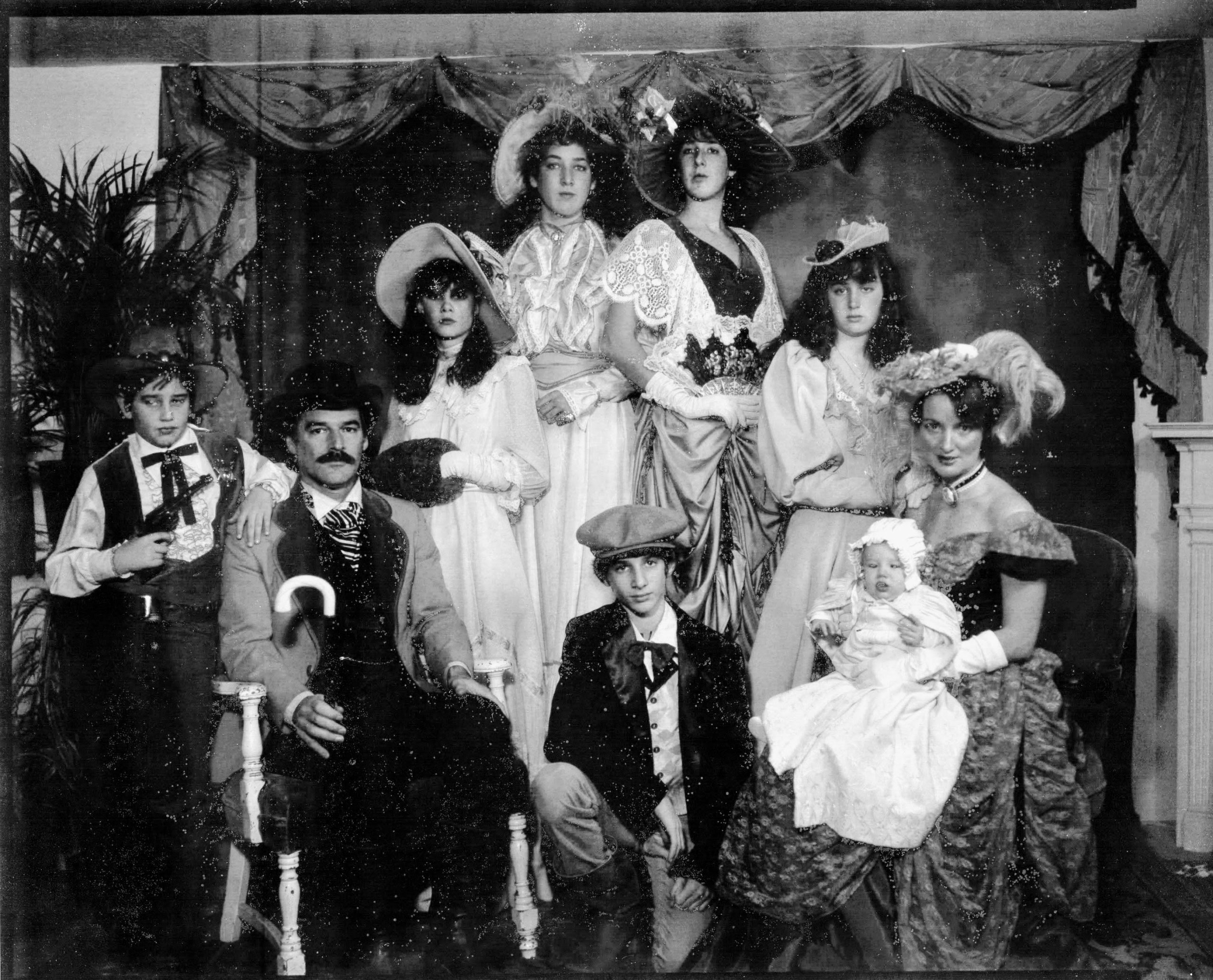
A lifelong Newporter, Terry was a loving husband and father, an accomplished athlete, and a successful entrepreneur. He raised three children, E’loise Tamer, Rebecca Toppa, and Michael Toppa with his former wife Susan Killebrew. He married Patricia (McCarthy) Toppa on May 25, 1980, and together they raised their daughter Nicole Nicodemus (Keith). Terry also helped raise three step-children, Stephanie Pires, Melissa Henry (Rob), and Lewis Abramson (Anita).
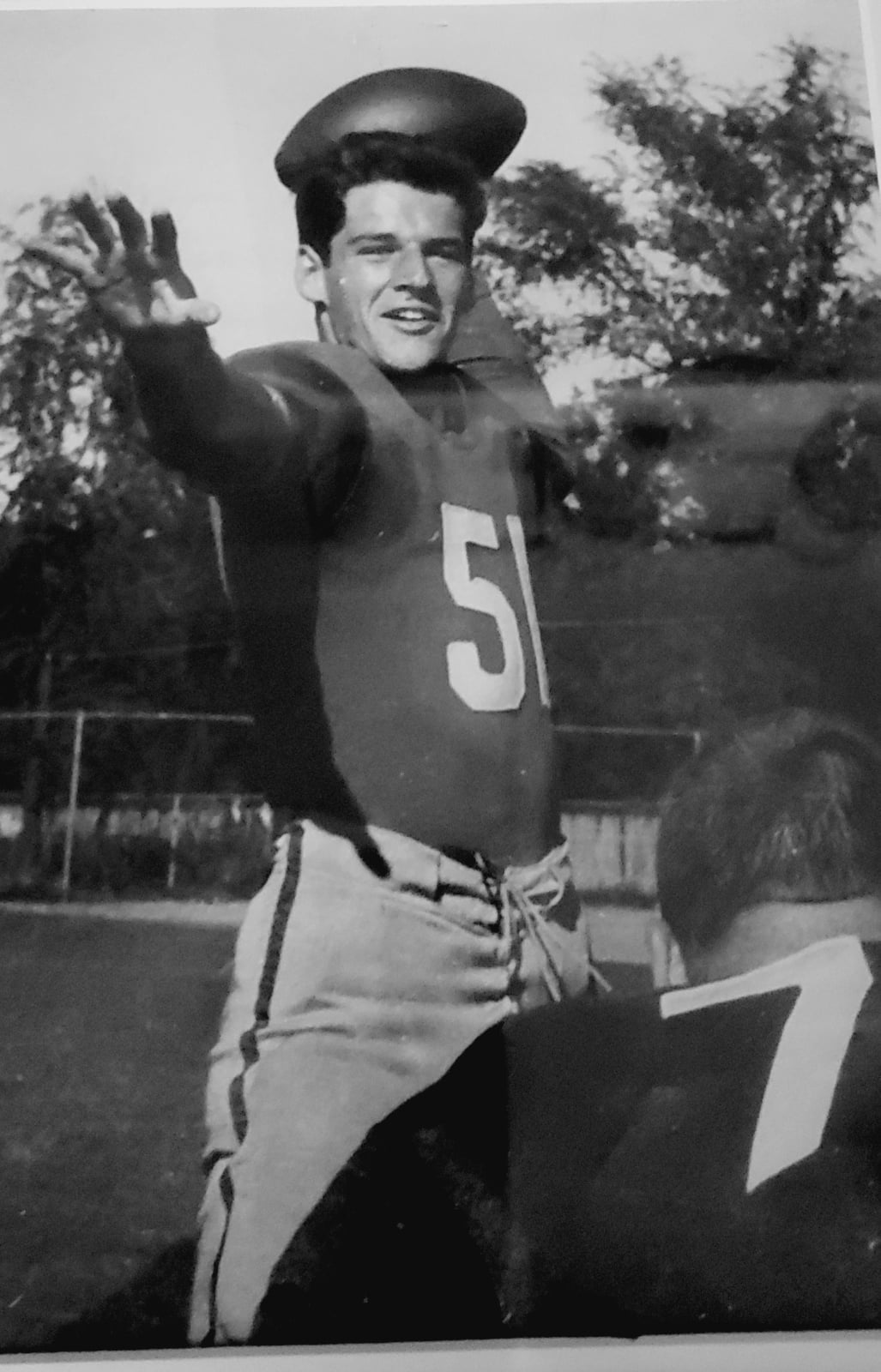
In high school he was captain of the basketball, baseball, and football teams at De La Salle academy. He played on the basketball teams for the University of Rhode Island and then Providence College, where he graduated in 1963. He was ambidextrous and was well known for making certain basketball shots with either hand. Later in life he became an avid tennis player and made many friends on the courts at the International Tennis Hall of Fame. He also won their meatball contest two years in a row with his famous meatballs.
In the 1960s Terry taught math at Thompson Junior High for three years and was an assistant football and basketball coach at Roger’s High School. He opened and operated several successful businesses in the Newport area. He opened Toppa’s Food Service (originally named The Toppa Company) in 1966 with his brother Paul. The Toppa’s delivery trucks are a common sight today in Newport. In 1990 he opened Toppa’s Maytag Laundry, and in 1985 he obtained his broker’s license and started Toppa Realty. He continued to work as a real estate broker for Re/Max of Newport for the rest of his career.
Terry was preceded in death by his parents and his brother Paul Toppa. He is survived by his wife Pat, his children and step-children, his sister Pat Olechnowicz, eleven grandchildren, a great grandchild, and numerous cousins, nieces, and nephews.
In 1995 I photocopied this ad from a 1966 issue of Time magazine. I was in grad school doing some research on the Vietnam war, and couldn’t help but notice it. It’s almost as over the top as the old Saturday Night Live fake ad for speed. I thought I lost the photocopy years ago, but found it in a box in my basement the other day.
If you can’t make out the “Note to Mothers” at the bottom, it says:
Note to Mothers: Exhaustion may be dangerous – especially to children who haven’t learned to avoid it by pacing themselves. Exhaustion opens the door a little wider to the bugs and ailments that are always lying in wait. Sugar puts back energy fast – offsets exhaustion. Synthetic sweeteners put back nothing. Energy is the first requirement of life. Play safe with your young ones – make sure they get sugar every day.
Of course, it’s the exact opposite of the truth:
Studies have shown that downing 75 to 100 grams of a sugar solution (about 20 teaspoons of sugar, or the amount that is contained in two average 12-ounce sodas) can suppress the body’s immune responses. Simple sugars, including glucose, table sugar, fructose, and honey caused a fifty- percent drop in the ability of white blood cells to engulf bacteria…[and] can reduce the ability of white blood cells to kill germs by 40 percent. The immune-suppressing effect of sugar starts less than thirty minutes after ingestion and may last for five hours…[and]…Sugar sours behavior, attention, and learning…
This got me wondering if these unhealthy effects of sugar were known at the time, so I did some looking around online. It seems like they weren’t, but of course, there was no scientific basis for all the claims in the ad, either. In 1972, Prof. John Yudkin published “Pure, White, and Deadly,” about the dangers of sugar, which promptly led to unjustified attacks on him and his work that ultimately led to the end of his career. At the time, the food industry was promoting a low-fat, high-sugar diet, so his research stood in the way of that. He wrote:
“Can you wonder that one sometimes becomes quite despondent about whether it is worthwhile trying to do scientific research in matters of health?” he wrote. “The results may be of great importance in helping people to avoid disease, but you then find they are being misled by propaganda designed to support commercial interests in a way you thought only existed in bad B films.”
I can think of some other areas where this is still the case today…
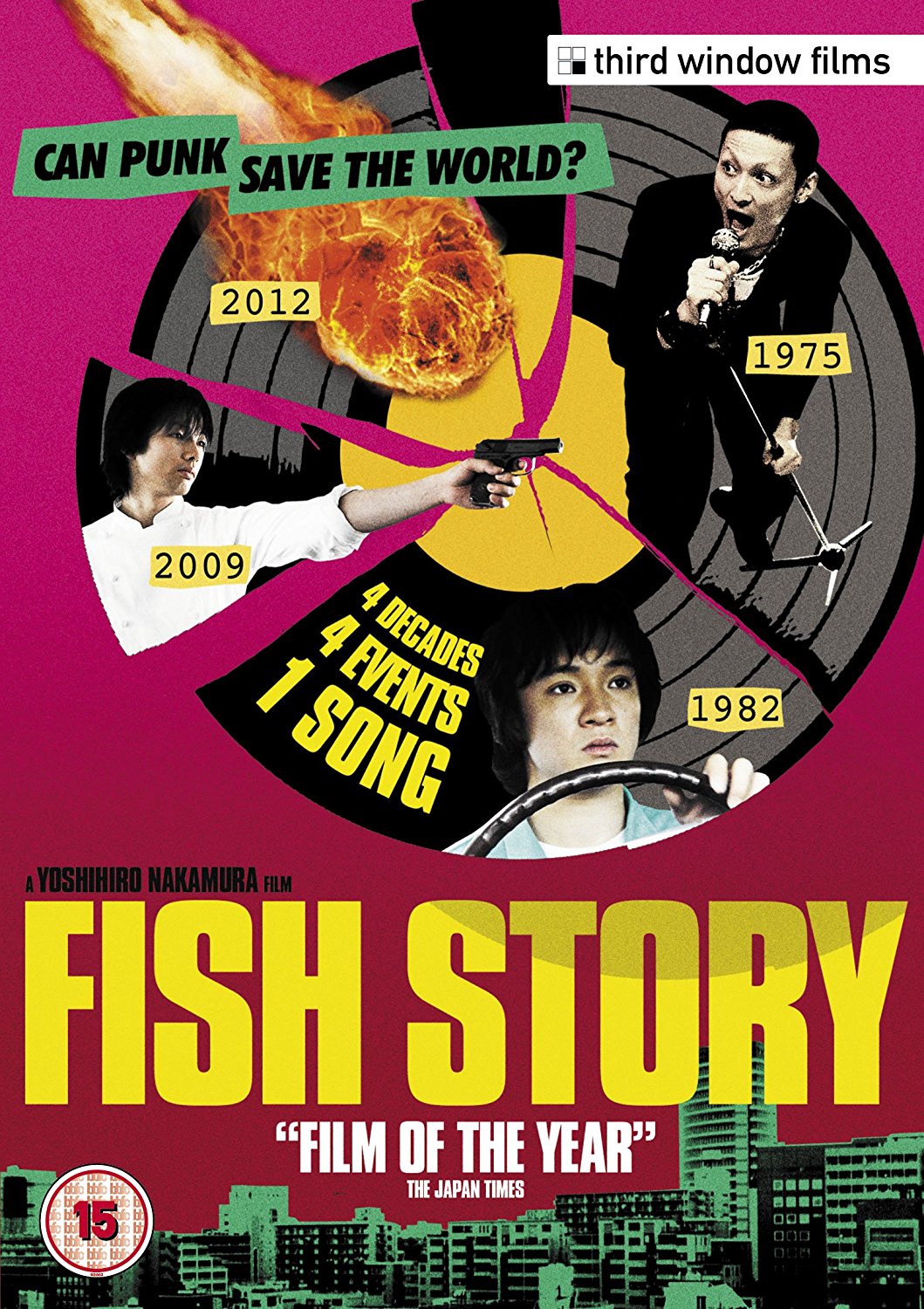
If you might like a movie that is equal parts…
…then you will enjoy Fish Story. There’s also a doomsday cult, a bitter old man, a brilliant mathematician, a hostage situation, and a love story, but I ran out of movie analogies. I encourage you to not read any plot summaries before watching it – a lot of the fun is watching the story unfold, as it definitely does not follow a predictable plot line. But I will share with you a bit of the review from Lost Turntable, which explains what makes it a good movie:
Although the idea of Fish Story is more than a little silly, its conceit is not. At its heart, Fish Story is about how music can connect with people and change their lives in unexpected and amazing ways. It shows how music can give us courage and hope, and challenge us to make ourselves and those around us better. It shows how a song, a stupid little song that almost no one in the world knows about, can drastically affect and change for the better the lives of people who have never even heard it. And when you think of it like that, it’s not hard to imagine that a song could, somehow, actually save the world someday.
Unlike modern American movie trailers that summarize the whole movie for you, the Japanese trailer for it gives you a sense of the movie without giving away the story (with subtitles).
View on YouTube
Unfortunately, it’s currently not available on Netflix streaming, but it used to be, and may come back in the future (here’s the Fish Story streaming page on Netflix if you want to check). Netflix does have it on DVD. It may be on other streaming services – there are several movies with this name, so definitely make sure you’re looking for the Japanese one.
Originally published March 1, 2012

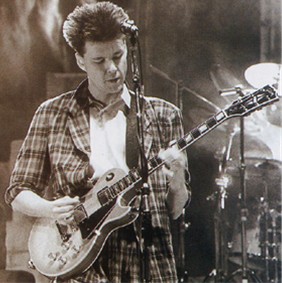
Big Country’s Stuart Adamson
Stuart Adamson was the singer, lead guitarist, and primary song writer for Big Country, my favorite band. I’ve always been dazzled by his guitar work, but not being a musician myself, I was never really able to find the right words to describe what I was hearing. When I meet folks who play guitar, I always have to recommend they give a listen to Big Country, as most are not familiar with Adamson’s work, but I’ve never been able to explain exactly why he’s so good. The other day I came across Tom Kercheval’s blog – he’s an independent musician – and not only is he a Big Country fan, he listed Adamson as his primary influence, and unlike me, he’s able to explain Adamson’s talent:
…the thing that always struck me about Stuart’s playing was not so much his lead playing (although it was great) but his rhythm guitar playing, particularly the odd chord structures he came up with. To this day, he’s one of the few guitar players that gives me fits when trying to figure out what he’s playing. His use of droning, open strings when playing chords was so appealling to me, and the Scottish/Celtic sound of the playing as well. He is so underrated. Beyond belief underrated. I still think the album Steeltown is a guitar masterpiece. Listen to that one with headphones and just hear the guitar symphony that is going on on most of those songs – tons of parts interweaving with each other, creating a huge, totally unique sound. Just brilliant. Like no one else.
In regard to Steeltown, I would add that it is also a masterpiece lyrically. Unfortunately, despite a 4-star review from Rolling Stone when it came out, it went nowhere in the pop charts. I think the album was musically too intricate, and lyrically too dense, to stand a chance on pop radio. But those are the qualities that have given it staying power – more than 20 years after it’s release, the opening track Flame of the West can still send chills down my spine.
This bio piece provides a good explanation for what inspired his songwriting, and what gives it the rare quality of being deeply personal yet political at the same time:
My mum and dad also had some great friends who played folk and country music (my mum does a mean Patsy Cline) and they would come to our house after the bars were closed and people would sing through the night. This made me aware of the power of the song and how music was interwoven with the lives of the working class Scots I grew up amongst. I would watch these big rough, hard men declare their love of family and the land — emotions they would be embarrassed to admit to in conversation — in songs old and new. I realised a lot of my schooling was solely aimed at my learning to accept my place in the British class system and railed against it. I believe the measure of a man is in his actions and not his social background (maybe this is why I like the US…another disenfranchised Celt)… A lot of the darkness of the Steeltown album comes from remembering my first experiences of the prejudice of class and nationality and the obvious truths that little had changed in my adulthood. The desire to write initially grew out of just wanting to be a “real” band and then I found I was driven to communicate some of the joy and frustration of the human experience…
Those are the people I grew up amongst and I could see the beauty in such simplicity as well as the anger and beaten acceptance. I think that frustration and learned apathy is the daily bread of the great majority of people in the world and as such represents the greater part of life experience, certainly in the western world and is to me a fertile source of inspiration.
Here’s the opening track from Steeltown, Flame of the West:
Originally published April 12, 2006
I’m excited to officially start my new job at PromptWorks next week. The slogan on their website says it all: “we are craftsmen.” If you’ve seen my Clean Code talk, you know what software craftsmanship means to me. An important aspect of it is to keep improving your skills. I’ve been working at PromptWorks on a contract basis for the past several weeks, and I can tell already that I will learn a lot from my new co-workers. They place a strong emphasis on Agile practices, quality, and working at a sustainable pace. I’ve seen enough so far to know that this isn’t just talk, and that their focus is on building long-term relationships with their clients and their staff. They’re also very involved in the local tech community. Among other things, one of them oversees the philly.rb Ruby meetup group.
They’re also supportive of me working remotely while my family and I are in Japan from July – December this year[/p2p], which is very generous of them (especially for a new hire).
I interviewed with several different companies recently, and for me, the most dreadful part of interviewing is being asked to do live coding. This is sometimes done in the form of a pop-quiz, where I’m presented with some out of the ordinary coding problem, and I’m expected to write code on a whiteboard, or hack together a quick script to solve it. Other times it’s a surprise mini-project I’m expected to do on the spot. Even though I’ve been coding for close to 20 years, and I’ve had plenty of experience doing quality work faster than expected, I’m terrible at these coding exercises.
The issue for me is that they are nothing like doing real work. The only times in my life I’ve had to think up code on the spot for a surprise problem and write it on a whiteboard is in interviews. And in a real job I don’t think I’ve ever had a project dropped on me out of the blue and been asked to code up a solution in an hour or two, with severe consequences if I make a mistake or try to talk to anyone about it.
My thinking process is largely driven by understanding context (the context of the code, and the context of the business problem), and these coding exercises are usually devoid of context. I’ve also trained myself over the years to not just hack things together. I was told in one interview that, sorry, you won’t have time to write tests. Telling me to take my best practices and throw them out the window in an interview strikes me as completely backwards.
How to best interview programmers is a hotly debated topic. Some very respected people, like Joel Spolsky, swear by the whiteboard-coding approach. Others say you’re doing it wrong:
A candidate would come in, usually all dressed up in their best suit and tie, we’d sit down and have a talk. That talk was essentially like an oral exam in college. I would ask them to code algorithms for all the usual cute little CS problems and I’d get answers with wildly varying qualities. Some were shooting their pre-canned answers at me with unreasonable speed. They were prepared for exactly this kind of interview. Others would break under the “pressure”, barely able to continue the interview…
But how did the candidates we selected measure up? The truth is, we got very mixed results. Many of them were average, very few were excellent, and some were absolutely awful fits for their positions. So at best, the interview had no actual effect on the quality of people we were selecting, and I’m afraid that at worst, we may have skewed the scale in favor of the bad ones…
So what should a developer job interview look like then? Simple: eliminate the exam part of the interview altogether. Instead, ask a few open-ended questions that invite your candidates to elaborate about their programming work.
– What’s the last project you worked on at your former employer?
– Tell me about some of your favorite projects.
– What projects are you working on in your spare time?
– What online hacker communities do you participate in?
– Tell me about some (programming/technical) issues that you feel passionately about.
When I became Director of the web team at the Penn School of Medicine, I led an overhaul of how we conducted our interviews, and we adopted questions similar to these. We focused on behavior-description questions, which are actually much more revealing than you might think, if you haven’t tried them before. We also asked for interviewees to bring in a sample of their code, and we’d have them talk us through it in the interview, and answer any questions we had about it. This was an excellent and reliable way to get an understanding of their experience level and getting past shyness and nervousness. For anyone who’s done half-way decent work, they always become animated when showing off work they’re proud of.
For my interview with PromptWorks, they gave me a small project to do on my own time, to turn in a few days later, which is also a good approach. Apart from that, they also had me do a pair programming exercise, which I was worried about at first, but the focus was on getting an understanding of my thought process and overall problem-solving approach, as opposed to how fast I could tear through it, or trying to hit me with “gotcha” questions.
And they hired me, so I must have gotten something right 😉
I haven’t been blogging for ages – it’s time to fix that. Let’s start with a recap of last night.
The monthly philly.rb meetup at the Comcast Center: how good were the presentations? They were just as good as the view from our room on the 45th floor:

View from the 45th floor of the Comcast Center, where we had the philly.rb monthly meetup
I got a lot out of Nate Olds’ talk, “Refactoring with a View.” A large part of my career has been spent wrestling with big, old, sprawling, messy codebases, so Nate’s real-life walk-through of his strategies for dealing with such challenges was very informative. Check out the February meetup page for more information.
Afterwards, a group of us went to Ladder 15 for beer, where we met up with Maria. She stoically suffered through several minutes of extremely nerdy conversion, before she and I headed to the Boot & Saddle, for a rare evening out without the boys, to see one of Maria’s favorite bands, Cibo Matto. It was a sold out show, and we ended up stuck near the back, but it was still a good time. I tried to take a couple videos, but they didn’t come out. A good introduction to their utterly goofy side is the song Sci Fi Wasabi (I’m Miho Hatori, straight out of purgatory), and their split-screen video for Sugar Water, with one side portraying the visual story in reverse, is quite clever (the ending is in the middle).
I’m presenting at the WordPress ‘Burbs meetup next Monday on Kanban. And on March 1 I’m presenting at WordCamp Lancaster: A11Y? I18N? L10N? UTF8? WTF? Understanding the connections between accessibility, internationalization, localization, and character sets.
I’ve been with ElectNext for a little over a year, and this past week was only the third time since I started that everyone in the company was in the same place, and the first time that it was for more than a day. There are currently 7 of us, roughly equally divided between New York, Philadelphia, and San Francisco. So a typical workday entails a good amount of time in Google Hangouts, which is a great tool for keeping a distributed time on the same page. But there are a couple things for which there is no substitute for spending time in person: one is building team relationships (here’s a great article on building distributed Agile teams), and the other is brainstorming around challenging problems. As good as Hangout is, and tools like RealtimeBoard, there’s still no substitute for a team putting their heads together in person around a whiteboard or big easel pad.
We rented a 4 bedroom/7 bed house on the north side of Lake Tahoe, right across the street from the lake. This was a workation, which means we put in at least as much work time as usual. But we also enjoyed our evenings and our surroundings. We each had a turn preparing dinner, and sat down most nights around 8:30 to eat, staying at the table until late into the night. And we took the day off on Friday for a hike up to one of Maggie’s Peaks.
Click the album cover below to see more great pictures!
If you use a mouse, hyperlinks, video conferencing, WYSIWYG word processor, multi-window user interface, shared documents, shared database, documents with images & text, keyword search, instant messaging, synchronous collaboration, asynchronous collaboration — thank Doug Engelbart
That quote is from one of Engelbart’s peers. It’s worth taking a few minutes to read the rest of his post, to learn about Doug Engelbart. Personal computing and the internet would not be what they are if it weren’t for his contributions.
About 14 years ago, when Maria and I worked at Stanford, we had dinner with him and his girlfriend, and another couple. He couldn’t have been more pleasant and down to earth. At the time I knew a bit about his history, but not the full extent of his contributions. And I left that dinner still not knowing – he was a modest man. Dave Crocker is someone who worked with him, and he wrote the following last night, after Engelbart’s daughter shared the news of his passing: “Besides the considerable technical contributions of Doug’s project at SRI, theirs was a group that did much to create the open and collaborative tone of the Internet that we’ve come to consider as automatic and natural, but were unusual in those days.”
The San Jose Mercury today re-published a profile of him from 1999:
But the mild-mannered computer scientist who created the computer mouse, windows-style personal computing, hyperlinking–the clickable links used in the World Wide Web–even e-mail and video conferencing, was ridiculed and shunted aside. For much of his career he was treated as a heretic by the industry titans who ultimately made billions off his inventions…
Engelbart is perhaps the most dramatic example of the valley’s habit of forgetting engineers whose brilliance helped build companies–and entire industries. CEOs fail to mention them in corporate press releases; they never become household names. Yet we use their products, or the fruits of their ideas, every day…
“We were doing this for humanity. It would never occur to us to try and cash in on it. That’s still where Doug’s mind is,” explains Rulifson, director of Sun’s Networking and Security Center…
Engelbart’s unwillingness to bend was in evidence when he met Steve Jobs for the first time in the early 1980s. It was 15 years since Engelbart had invented the computer mouse and other critical components for the personal computer, and Jobs was busy integrating them into his Macintosh.
Apple Computer Inc.’s hot-shot founder touted the Macintosh’s capabilities to Engelbart. But instead of applauding Jobs, who was delivering to the masses Engelbart’s new way to work, the father of personal computing was annoyed. In his opinion, Jobs had missed the most important piece of his vision: networking. Engelbart’s 1968 system introduced the idea of networking personal computer workstations so people could solve problems collaboratively. This was the whole point of the revolution.
“I said, ‘It [the Macintosh] is terribly limited. It has no access to anyone else’s documents, to e-mail, to common repositories of information, “‘ recalls Engelbart. “Steve said, ‘All the computing power you need will be on your desk top.”‘
“I told him, ‘But that’s like having an exotic office without a telephone or door.”‘ Jobs ignored Engelbart. And Engelbart was baffled.
We’d been using electronic mail since 1970 [over the government-backed ARPA network, predecessor to the Internet]. But both Apple and Microsoft Corp. ignored the network. You have to ask ‘Why?”‘ He shrugs his shoulders, a practiced gesture after 30 frustrating years…
Here is a set of highlights from his famous 1968 demo of the systems his team developed, showing early versions of computer software and hardware we now consider commonplace. In the 8th video, he shows their online, collaborative document editing system, which looks like an early version of Google Docs. In the 3rd video, he describes the empirical and evolutionary approach they took to their development process. This was another of his ideas that the industry discarded, only to finally re-discover its value, more than 30 years later, as what’s now called Agile development.

My presentation with Keya Dannenbaum at TransparencyCamp: "Civic engagement, local journalism, and open data"
After my WordCamp Nashville presentation[/p2p], I transitioned from talking about how to write clean code, to talking about how the web is transforming the world of journalism, and what it means for civic engagement. This was the topic of the BarCamp NewsInnovation talk two weeks ago in Philadelphia given by Dave Zega and I (we work together at ElectNext). I also presented a longer, more in-depth version at TransparencyCamp in Washington, DC last week, with our CEO, Keya Dannenbaum.
Both conferences were “unconferences,” which means there’s an emphasis on discussion rather than long presentations, and the schedule is determined by the conference participants themselves, on the morning of the conference. However, both had some pre-scheduled talks, including ours.
The TransparencyCamp talk was titled “Civic engagement, local journalism, and open data.” Here’s the summary:
A fundamental purpose of journalism in the United States is to inform citizens, so that they can effectively engage in democratic self-governance. The ongoing disappearance of local newspapers in the digital era is well known, resulting in the decline of traditional watchdog journalism at the local and state levels. There are discussions of “news deserts” and unchecked malfeasance by elected officials. At the same time, we’re seeing the rise of citizen journalists, the growth of organizations that harvest, enhance, and distribute an ever-expanding range of data on government activities, and the creation of new opportunities to share, discuss, and analyze information vital to civic engagement.
For the goals of achieving government transparency and effective self-governance, what has been lost and what has been gained in all these transformations? Is the net effect positive or negative, and what lies ahead? In this talk we’ll lay out the different arguments in this debate, and we’ll engage the audience in the conversation.
I was really impressed by the quality of the audience questions at both conferences, and their engagement with Twitter. Our talk generated over 40 tweets at Transparency Camp. Here are samples from both talks:
@MobileTrevor Result of losing local news is fewer voters, lower civic participation, increased corruption, etc says @mtoppa #TCamp13
@zpez how can you maintain local engagement after an acute issue is resolved? build stronger networks; tap into the ppl w/ the data #TCamp13
@_anna_shaw The ‘digital political baseball cards’ from @ElectNext are pretty darn cool… Gonna be playing around with these later. #TCamp13
@ianfroude Local papers dying, so ‘ppl have gained access to the world (intl/natl papers) but lost access to their backyard’ #TCamp13
@jmikelyons: Politicians know everything about us, we know little about them. The Big Data Divide. Big civic problem #bcni13
@emmacarew #bcni13 impressive: folks at @electnext are working directly with the mayor’s office to makes data not just available but accessible
Transparency Camp was the larger of the two – over 600 people attended. Some traveled quite a distance to be there. In our talk we had questions from people involved in the media from as far away as Poland and Uganda.
Both conferences had a great sense of community. Many of the conversations I heard around me were similar to conversations we have at ElectNext, about how to bring greater transparency to government activities, and making open government data accessible and useful. I also had an unexpected but very welcome encounter: while passing through a crowd I heard a nearby voice say “hey Mike Toppa,” and turned to see a face I hadn’t seen in over 10 years. It was a former co-worker from my time at HighWire Press. He works at the Sunlight Foundation now. It was great to catch up and compare notes on our work. After the conference, I also got to catch up with my old friends Pat and Emma, from my days at Georgetown.
Here are the videos for both talks. If you only have time for one, I recommend the TransparencyCamp talk (the first one below). Below the videos are my summaries of the sessions I attended at Transparency Camp.
These are my own brief summaries of the talks I attended. Most sessions had note takers, and their notes are at the TransparencyCamp site.
I’ve barely blogged at all for months, as I’ve been crazy-busy working for ElectNext. I’ve been on contract for a couple months, and I’m about to become employee number 5 (here’s the rest of the team). I found out about ElectNext late in the summer, when Philly Geek Awards nominated them for startup of the year. The first thing I learned in the interview, however, is that they planned to base the engineering team in San Francisco. As much as I’d like to move back to California, that’s not in the cards right now. I also didn’t have any Rails experience, and the position was for a Rails engineer. So it made for an interesting interview! In my favor was that 12 years ago I came up with an idea for a candidate matcher similar in concept to ElectNext’s, and built a prototype for it when I worked at Ask Jeeves, my research in grad school focused on voting behavior, the CTO and I share a passion for clean code, and I was confident I could ramp up on Rails fairly quickly, given my other web development experience.
So what is ElectNext? Let our CEO Keya Dannenbaum explain it to you. Her presentation put us in the top 5 out of 77 startups at DEMO earlier this month:
Personally, I feel like I’ve found my dream job. Web development has been my career, but I’ve never let go of my interest in politics – specifically my interest in fostering civic engagement. The opportunity to combine the two is a thrill for me. And the team couldn’t be better: John has been a great Rails mentor, I work with Dave once a week at Indy Hall (I work from home the rest of the time), and I’ll be with the team in New York City next week, just in time for the election. After the election, we’ll be broadening our focus to local issues and elections, so we can be an ongoing, nonpartisan resource to help people engage politically in their communities, as well as nationally for issues important to them.
With the election one week from today, we could use your help to maximize our exposure while interest nationwide is at its peak. Please take a moment to like us on Facebook, follow us on Twitter, and go to ElectNext.com to see which candidates align with you. When you get your matches, or if there’s a issue that’s important to you, click one of the links to tweet it or post it on Facebook. This is a key time for us, and your clicks can lead to a positive, viral increase in our exposure.
We also have an embedable widget version of our candidate matcher you can try. We’ve got it on a number of sites, including MSNBC, PBS NewsHour, The Washington Post, Philly.com, and many others, including, of course, toppa.com:
[Update: now that the election is over, we’ve retired the 2012 candidate matcher]