Monthly Archives: November 2026
Jaws, public domain art, and Magic: The Gathering
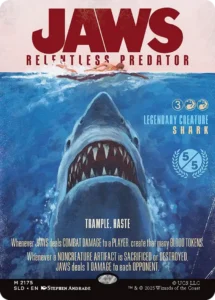
I’m an avid Magic: The Gathering player, and last year they did a limited print run of a Jaws, Relentless Predator card. And yes, it’s that Jaws, from the movie and the book. The card is a perfect fit for my Inti, Seneschal of the Sun Commander deck. But there are two problems with the card:
- Since it’s a strong card and it’s a limited printing, it’s really expensive. It currently goes for about $170.
- The card art is clever – making it look like a movie poster – but it looks nothing like a regular Magic card and it’s hard to read, which is annoying in game play.
So I wanted to make a proxy card for it, using the typical Modern frame for a Magic card, but what to do for the art? I wanted to avoid anything copyrighted, and I’m not an artist. I looked online for any public domain art that might be suitable, and learned something really interesting: the original movie poster and book cover art is public domain. From It’s True: The JAWS Shark is Public Domain:
See, when he [Roger Kastel, the artist] made the painting in 1975, copyright was still ruled by a 1909 law that said you had to include a copyright notice upon publication of a work, and that notice had to include your name. When the book was published, it carried no such notice for the artwork. It only had a copyright notice for the text. That meant that the painting became public domain as soon as it was published.
Kastel tried multiple times to claim copyright after the book was published, but was denied every time by the copyright office. Jaws did at least lead to other work for him, designing movie posters for The Empire Strikes Back and others.
So I was free to use the original art in my card. I tried several online Magic card design tools, and ultimately used Card Conjurer – it’s free and works great. Then I ordered prints of the card from MTG Proxy. In my order I included a note that the art was actually public domain, so they printed it for me. Magic cards sometimes have a quote on them, and I couldn’t resist including the most famous line from the film. Here’s what it looks like:
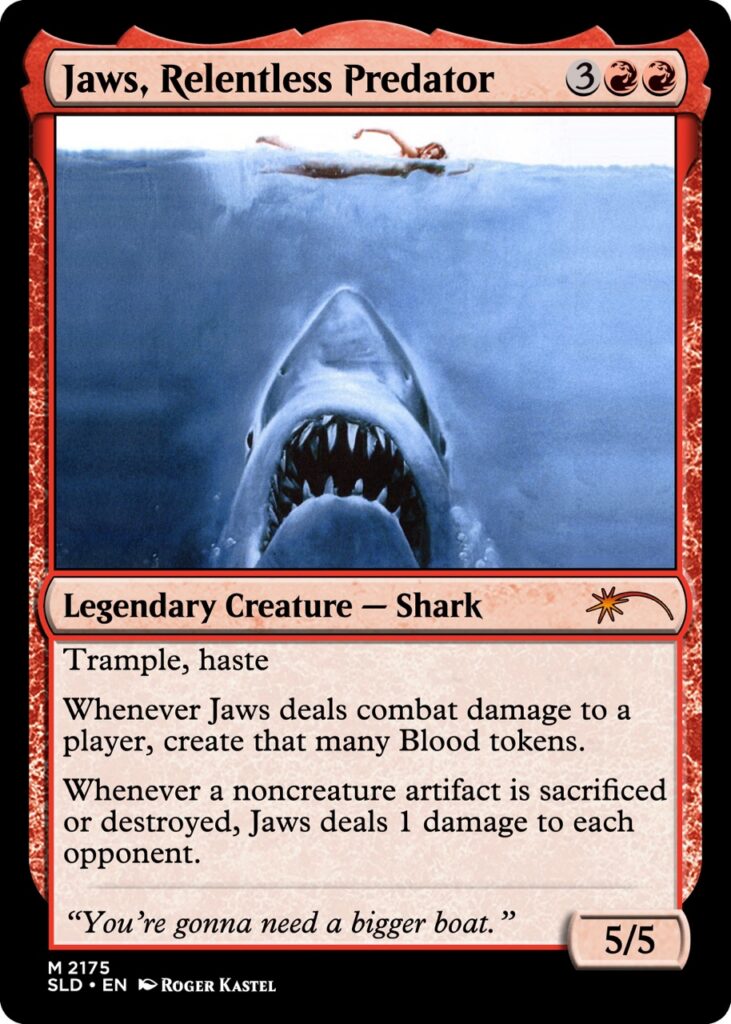
There’s speculation that the upcoming Nauctis: The Sunken Realm set will include an “in universe” version of the Jaws card (i.e. a card with the same abilities, but with a name that doesn’t make references outside of the Magic universe). Either way I’ll still have fun using this one! 🦈
AI coding on the go: keeping an unplugged Mac awake with the lid closed
I’m a member of the Innovate Newport co-working space and sometimes Claude Code is still earnestly coding when it’s time for me to leave at the end of the day. Leaving means I need to unplug my Mac laptop and close the lid. The Mac’s built-in caffeinate command doesn’t help here: it will keep the computer awake with the lid closed only when on AC power.
Looking around online, I found a variety of approaches to solving this and the one that I liked best was a no-nonsense script in an old StackExchange post from 2017. I made my own version with a few refinements, which I’m happy to share. I kept the original author’s name for it: noz (for “no 💤”). You pass it the number of minutes to stay awake. Here’s an example:
$ noz 20
Password:

Preventing sleep for 20 minutes; press <enter> to continue...
Restoring previous battery sleep setting: 5
It changes the laptop’s sleep settings so it requires sudo. Then at the end it restores the original settings.
A couple things that should have been obvious to me, but I still managed to forget more than once 🤦♂️:
- If you’re on the move you’ll want to switch to mobile wifi first, like tethering to your phone.
- Don’t put the laptop in a sealed carry case/sleeve. Since it’s not sleeping, it may got hot.
I made just a few tweaks to the original: mine takes input in minutes instead of seconds, restores the original sleep settings, and runs sudo before displaying its messages instead of after.
Note if you look online, someone made a Homebrew version, also called noz, which I’m not linking to, as it looks remarkably similar to the StackExchange script but doesn’t credit it. It’s about 5 times as much code, mostly for visuals like a countdown, etc. but no additional functionality.
Revisiting the TV show Legion
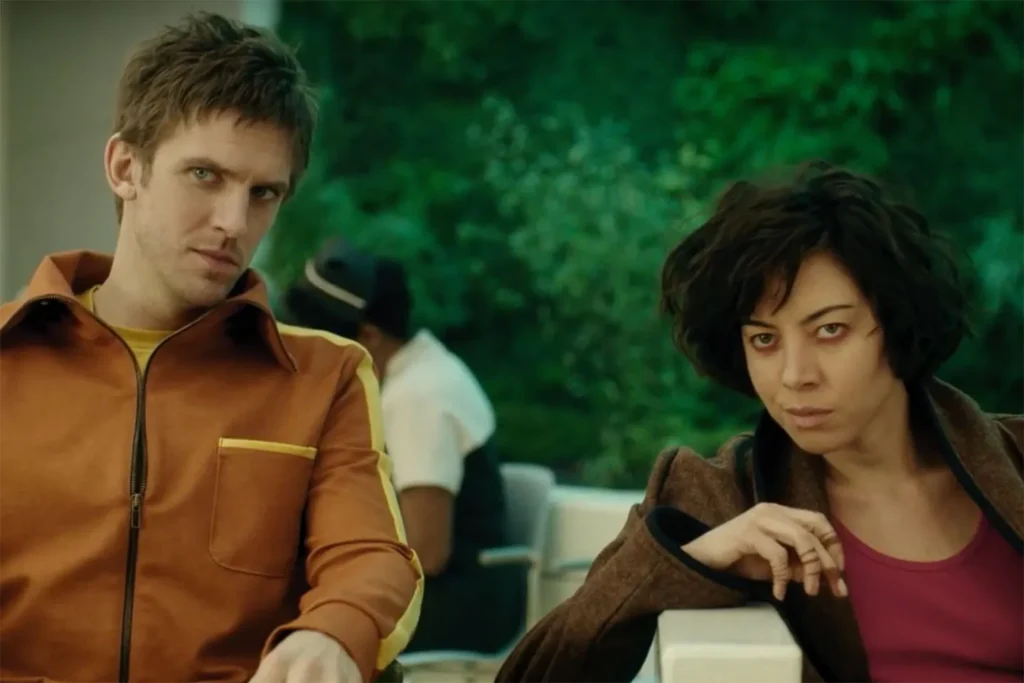
For me, the pilot episode of Legion is one of the finest hours of television ever filmed. The series ran for three seasons on FX, from 2017-2019. The pilot features all the hallmarks of the show: great acting, an intricate and often convoluted storyline, and fantastic cinematography. It also featured one of the series’ occasional dreamlike song and dance numbers, which somehow always managed to feel at once both unexpected and perfectly suited to the show. It’s the kind of episode you may want to watch a second time to catch everything that’s going on, so it’s not for the casual viewer. And as I learned later, it perfectly sets up everything that follows in the series.
Beyond the pilot, the villain can make or break a story, and I have to say that Navid Negahban steals the show as Amahl Farouk (the Shadow King).
Trustworthy AI coding: writing and implementing plans
I haven’t posted in a while, as I’ve been working on several Claude Code skills to share. I’ve made my claude-plugins marketplace publicly available. There’s a lot there, and I’ll be covering them in a series of posts.
I’ll start with the write-plan and implement-plan skills. I wrote a post on iterative planning three months ago but it feels like a million years ago. A lot has changed since then. My argument back then was that no amount of up front planning and research was going to catch every problem, so letting Claude execute a plan without supervision did not seem wise to me. That reflected my experience at the time, working in both greenfield projects and large legacy codebases. Since then, the Claude Code models have kept improving, and – with a lot of learning from others – my ability to coax increasingly robust work out of them has also steadily improved. My updated plan skills reflect that learning. I was also inspired by the RubyConf talk I wrote about earlier, about making AI coding output trustworthy by default, as well as other similar talks and articles.